Paint with Words

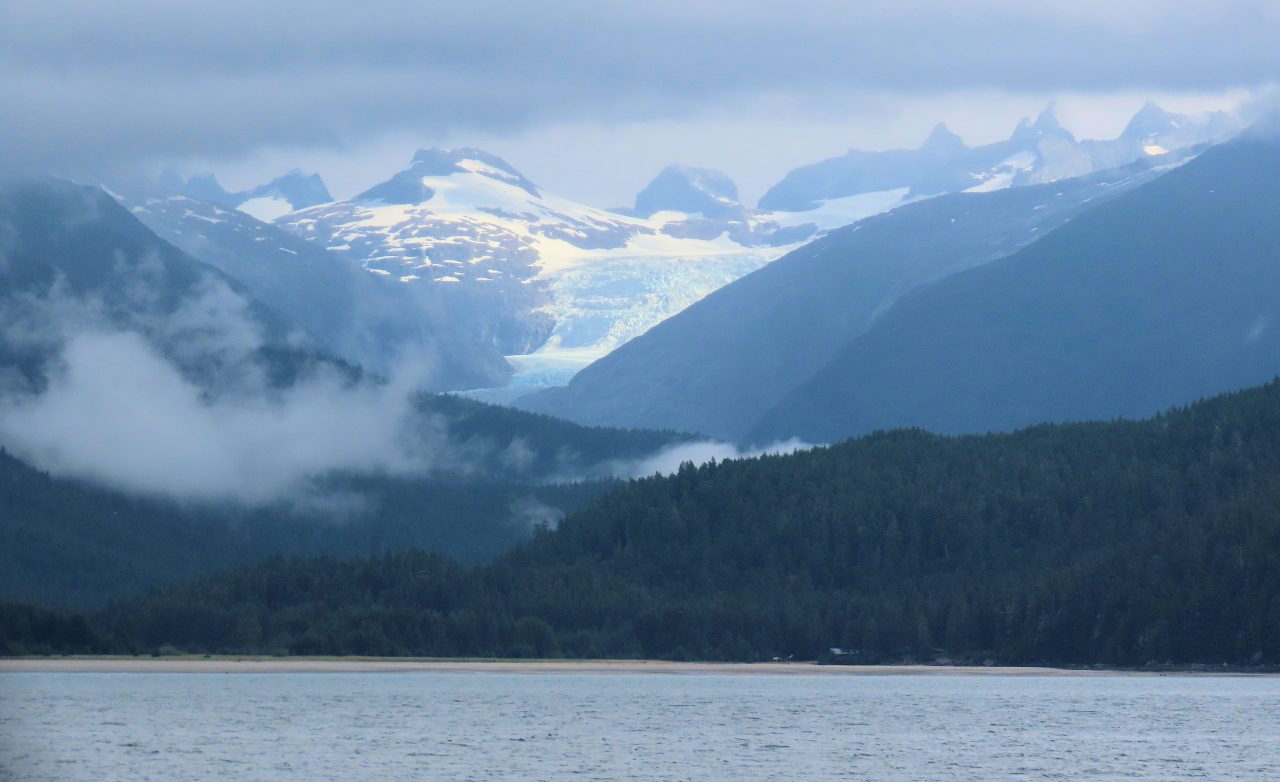
John Steinbeck is a master at description. He has an incredible ability to create scene in such a way that the reader steps into the picture.

Pick up a copy of the novel Of Mice and Men and read the first three pages. Steinbeck takes us to a place alongside the Salinas River. There are sycamore trees with well-worn branches from countless passing hobos who sit before a blazing fire. Lizards skitter in the fallen leaves and rabbits hop along on their way to the water. A blue heron takes flight with mighty wings and wind rustles the leaves of the trees.

It is a calm, serene spot. A place to shelter after a long day walking the dusty roads. A place where boys come to swim and dry off on the sandy beach. In the distance rise the Gabilan Mountains, purple in the afternoon haze.

Into this scene come the main characters that travel together despite their dissimilarities. Once again, Steinbeck uses his skills to describe the men in such a way that we see the chisel face and lean, muscular body of the first and the soft, featureless face of the second.

Try writing a similar scene. Close your eyes and picture a place that you enjoy. A place that you know so well that every detail comes alive. Use your senses to hear, feel, see all that surrounds you. Taste the sharpness of the air as it is flavored by the scents of the plants growing there.

Imagine picking up a pencil and sketching the main points. Don’t forget to include those things far off in the distance as well as those closest to the edge of the tablet. Now add color, slowly, one at a time. Think of all the different hues that suffuse the scene.

Begin to write as if you have just turned a corner and stepped into the spot. Take your time. Don’t leave out tiny details, even if you think you are writing too much. Pretend that you are recreating the place for someone who has never been there, so colorfully that they are going to want to travel there with you. Write and write and write some more.

Step aside from your passage for a few days. Allow it to brew in your mind. Go back whenever something new strikes you and add it to the picture, then move away again.

Only after several days have passed do you spend time with your work. On this reading, refine your description. Combine sentences/phrases that complete each other. Eliminate only those items that are trivial or distract the reader. Change words that are weak for those that jump with power.

Are you pleased with your effort? Does your finished product sing? It should.

About the Author

Terry Connelly received her BA degree in English and her single-subject teaching credential in English from the California State University of the East Bay in Hayward, California. She taught highschool English for 20 years, working with both college prep and learning disabled students.

She is working on two novels, Thinlistic and The Story Cried.

The Imperfect Character

There is no such thing as a perfect person. Human beings are born flawed, some more than others, and as we grow, those flaws can become so amplified as to impact how an individual thinks, acts, speaks and believes.

Some of us wear glasses, some of us lisp, some are born deaf and some are mentally/physically challenged. These deficits vary in intensity, from being a mild irritant to a severe impediment. Many of us function quite nicely in society, while others of us need assistance to get by.

Your characters need to reflect reality in order to be believable. Imagine a scene in which too practically perfect people sit down at a coffee shop. Write the dialogue that they have. What do they talk about? How do they react? Do they simply sit and smile and nod complacently when the other speaks, or is there a true conversation in which opinions are stated? All too often perfect people are portrayed as the ideal. They live in huge houses, dress in the best fashions and drive the most expensive cars. What many of us can’t imagine are the worries or concerns that they have. Not that they don’t worry about illness or financial ruin, but what about the everyday nuisances that fill many of our lives? So have them sip from their expensive coffees and talk.

Reread what you have written. Does the scene feel true to life or is it stilted and flat?
Now give those two individuals characteristics that make them unique. Does one of them stutter? Blink obsessively? Twirl her shoulder-length hair? Tap his foot impatiently? Constantly check her watch or cell phone while attempting to pay attention? Move his hands about to emphasize points or sit with hands neatly folded in the lap?

Think about their physical appearance. Perhaps one of them has wind-blown hair while the other has a bad comb over. Maybe one wears black lipstick while the other one’s face is heavily caked with makeup. One might be tall with broad shoulders while the other is short and paunchy. One walks with a bit of a limp after suffering through knee-replacement surgery while the other moves about on the balls of his feet.

Be careful, however, when giving descriptions of characters. These details need to be worked slowly into the story, not delivered as a list. They are important, however, as those quirks impact how the character thinks and reacts.

So, how do these factors influence the conversation? The foot-tapping person might be abrupt in speech and impatient when listening to long-winded stories. He might interrupt frequently or finish the sentences of the other in an attempt to move things along. The paunchy individual might speak with a full mouth and sound muffled and indistinct. The hand-flapper might be somewhat clumsy and so inadvertently spill his drink. The bad hair individual might constantly be messing with it, trying to smooth out the tangles, and so lose concentration and need to have things repeated.

Now rewrite your scene, this time with your two imperfect people. Begin when one of them comes walking into the café while the other is already seated. How do they greet each other? What topics of conversation do they cover and how are these issues brought up? Make sure that your characters have unique voice and patterns of speech.

Is there a difference between your two versions? Which one feels more realistic? Believable? More natural?

Keep this exercise in mind each time you write.

Create Your World

The importance of setting cannot be downplayed. Time and place determine what and how the characters say, do and think. Clothing worn, food eaten and language spoken are all determined by setting.

Naomi Novik’s novel Uprooted is an excellent example. Her story takes place in a fantasy world filled with magic, terrifying creatures and heroes who face inhuman odds. Told like a fairy tale, the story pulls the reader into the enchanted Wood, in and out of villages, over mountain and along a river. It is rich in detail, a three-dimensional world of grace and horror.

Even though your story might not be fantasy, you settling must be equally detailed. The reader must see the sights, experience the events and feel the emotions that the characters share.

Before you write your next story, open a new document and map it out. Name streets, cities, waterways and businesses. Flesh out your characters by giving them unique clothing and hair styles. Write sample dialogue for each to establish speech patterns. Think about personality and how each character reacts when happy, sad and depressed.

Your task is to design the setting for a story you have in mind. Chart it out. It might take only a few minutes or maybe a couple of hours, but do it anyway. Make a list for each character. Establish place and time with so much detail that an artist could paint the scene.

Only then do you let your characters tell their story.

Change Happens

Every story must have a dynamic character, one who changes because of the action of the plot. This change does not have to be cathartic, meaning that the character does not have to experience a life-altering revelation that affects perception of the world or people around him/her. Instead the change can be subtle.

Perhaps she realizes that her best friend has not been loyal, and so vows to never trust that individual again. Maybe he goes for a walk in the woods and sees the most beautiful meadow in an area that is slated for logging. The character realizes that he/she must act in response to the situation.

Stories also have static characters. These do not change and so are exactly the same as they were at the beginning of the story. Static characters flesh out the details, give the protagonist someone with which to interact, and are sometimes the stimulus to change.

Good stories have both types. Look back at something you have written recently. Does your protagonist experience change? Is he/she different from when the story began? If not, what details do you need to add to give your character that opportunity to grow?

Rewrite those scenarios in which opportunities arose for change, but which were not fully explored. Add in details that enrich the life of the protagonist, rounding him/her out in fuller detail. Make your character dynamic, so that at the end of your story he/she is different from when the story began.

Heroes Among Us

Recently a group of young men saw an intruder on a speeding train and stopped him from causing harm to passengers. They have been hailed as heroes and were recently awarded France’s Legion of Honor, the highest award a civilian can receive.

Is your character a hero? If you write horror or thriller, then you must have a hero in your story. Your protagonist pursues the villain with determination, faces danger repeatedly as he/she narrows down the chase, and eventually catches/kills the opponent at great peril to herself.

Everyday heroes are more prevalent in society. These are the individuals who spend their own money to feed and clothe the homeless, buy school supplies for poor children, and give what they can to deserving charities. They volunteer at schools, charity shops, senior centers and kitchens. They deliver meals to homebound seniors and visit the sick with thoughts of kindness and healing.

Such heroes are all around us, but because they tend not to wear uniforms, we might not see them.

Write a scene in which your protagonist is a hero. Choose an act that fits his personality and demeanor. Have her go about her day with flare or with modesty, whichever fits. What kind of thanks does she receive? Is it simply a smile or nod, or a medal?

A Parental Dilemma

I recently read The Dinner by Herman Koch. In this novel, a couple meets at a restaurant for an expensive dinner. During the course of the meal a sensitive subject comes up. Both families have equal-age sons who are friends. Both sons have been involved in a terrifying incident.

Discussion revolves around to what extent parents will go to protect their children. At what point would it be considered to be going too far? Or not far enough?

This novel made me think about an incident that took place in my classroom. After an intruder-alert drill, one of my students asked me if I would get between him and an intruder, to essentially take the bullet for him. My response was a definite no.

But how do I know this for sure? Until I was in that situation, I have no way of knowing how I would react.

For this assignment, think about your character. Put him/her in such a situation. Would he/she lie, cheat steal to protect the child? Would the character complete the child’s homework assignments? Verbally attack children who bully or tease, or let the children work it out on their own?

Write a scene in which the child is in some kind of trouble. What does the parent do? Come to the rescue? In what way? What is the outcome? Remember that not all stories have happy endings, so it is okay if things do not work out in favor of the child.

The Importance of Setting

Your story takes place in a very special environment, so choose carefully. Setting controls the things that your character sees, hears and does.

If it is a time in the past, you might have to do some research. What does the city/country look like during that time period? How do people speak? What slang words and sayings were popular then? Did technology exist?

For example, I remember that my mom’s first washing machine was a ringer style, meaning that once the clothes were washed, they had to be passed through the ringers one by one in order to remove as much water as possible.

What if you choose a future world? The same rules apply. Map out the dimensions of your world. Draw in the ports, mountains, cities both large and small. If there are boundaries between countries, make them clear. Think about the shapes of buildings. Are they all high-rise or has some disaster occurred that destroyed everything and so construction is primitive? What types of technological devices do they have? If smart phones, what can the phones do in your world that they cannot do now?

I recently read a futuristic story in which the characters used watches to communicate. At the time the story was written, that would have been considered new technology, but it isn’t today. Think outside the box.

Part of the setting would also be the threat level. Does your character live in a dark time in which danger lurks in every corner? Or is it a peaceful seaside village filled with happy, complacent people?

I find it best to write it down. Make a list. Even collect photo images and put them all in a binder. The advantage of using a binder is that you can store all your information in one place and keep it handy. Refer to it often so as to remain consistent in your story.

Have fun with this one.

Character description

Have you ever sat down and prepared an outline that describes your characters? Thought about their likes/dislikes? Where they’ve been and what types of things they like to do?

If you haven’t, the time to do so is now. Why? It’s important to know what our characters like and dislike in order to understand what motivates them to behave in certain ways.

Your task is to create a list for each character in your story, whether a main character or a subordinate. Include where they are from, family ties, mannerisms (such as head toss, twiddling fingers) and friends.

Write out some sample dialogue that shows the differences in the ways your characters speak. Do they have an accent? Use contractions or use more formal language?

Upon up a few YouTube videos and listen to what word choices people use. Each of us has a different pattern and rhythm to our speech. Create dialogue that shows those differences.

Lastly  look through websites and find pictures of where your characters live, how they dress, places they might visit.

Put all this in a binder so that it is easy to access.

Now, begin working on your characters!

Have fun  with this one.

Journeys

Throughout our lives we have experienced many different kinds of journeys. Some are internal, such as exploring personal beliefs, while some involve travel around the country. Most enrich our lives, either through things we have seen, people we have met or observations that impact us due to their unusual nature.

Everyone travels, although the distances that we cover vary depending upon time and money.

Some of us only visit relatives. We might drive overnight to get there and crash on floors while we are there, but we get to spend time with them, learn from them, be with them.

Some of us are lucky to travel further from home. We hop on planes and dash across the country or drop into other countries. We walk about, seeing things that we’ve dream about.

Your task is to write about a journey that you have experienced. Think of the sights, sounds, feelings that might have changed you. Use details to enrich the story.

Add in characters that you saw in order to add depth.

Have fun with this one.