Secondary Characters


Before the story begins, not only does our protagonist know what she wants, has known what she wants and has struggled with getting what she wants, but her friends and family have also struggled with their desires.

The overlap is what concerns the reader. Secondary characters are not just in the story in order to allow for dialogue, but to impact what happens to the protagonist, in both positive and negative ways.

Consider the so-called best friend who feeds the protagonist gossip about the boyfriend that causes a breakup so that now the friend can date the boy. The friend has an agenda that negatively impacts the protagonist, causing pain and anguish and forcing her to do something that she didn’t want to do. Now it may turn out that the breakup was a positive step, especially if the boyfriend is hyper-controlling or abusive, but in the immediate, the pain of separation is real.

Your task is to think of secondary characters that could populate your story. Make a list of who these people could be and their relationship to the protagonist. For example, a young person might be influenced by a teacher, an adult by a boss, a sick person by a nurse and a contractor by an engineer.

Make another list of issues that each secondary character brings to the story. For example, the teacher might be emotionally drained due to the illness of her husband, the boss might be up for a promotion if a project is well-received, the nurse might be struggling with paying the rent and the engineer might have lost important designs. The more issues you come up with, the better your options become.

From both of your lists, choose one character and one overriding issue. Your next step is to list ways in which this issue will affect your protagonist.

Your background work is now done. When you write interactions between your protagonist and your secondary character, do not fill space with the issues. Instead, consider the feelings of the secondary character facing the issue, and how those feelings affect the ways in which that character talks to your protagonist.

Write a scene rich with dialogue. The protagonist wants something because all protagonists must want something or there is no story. She meets her friend. They talk. The protagonist is hoping to hear words of reassurance or advice, but the secondary character is consumed by her own desires.

Imagine how fulfilling the conversation will be and what each character gets out of talking to the other.

This will not be an easy task.

Have fun with this one.
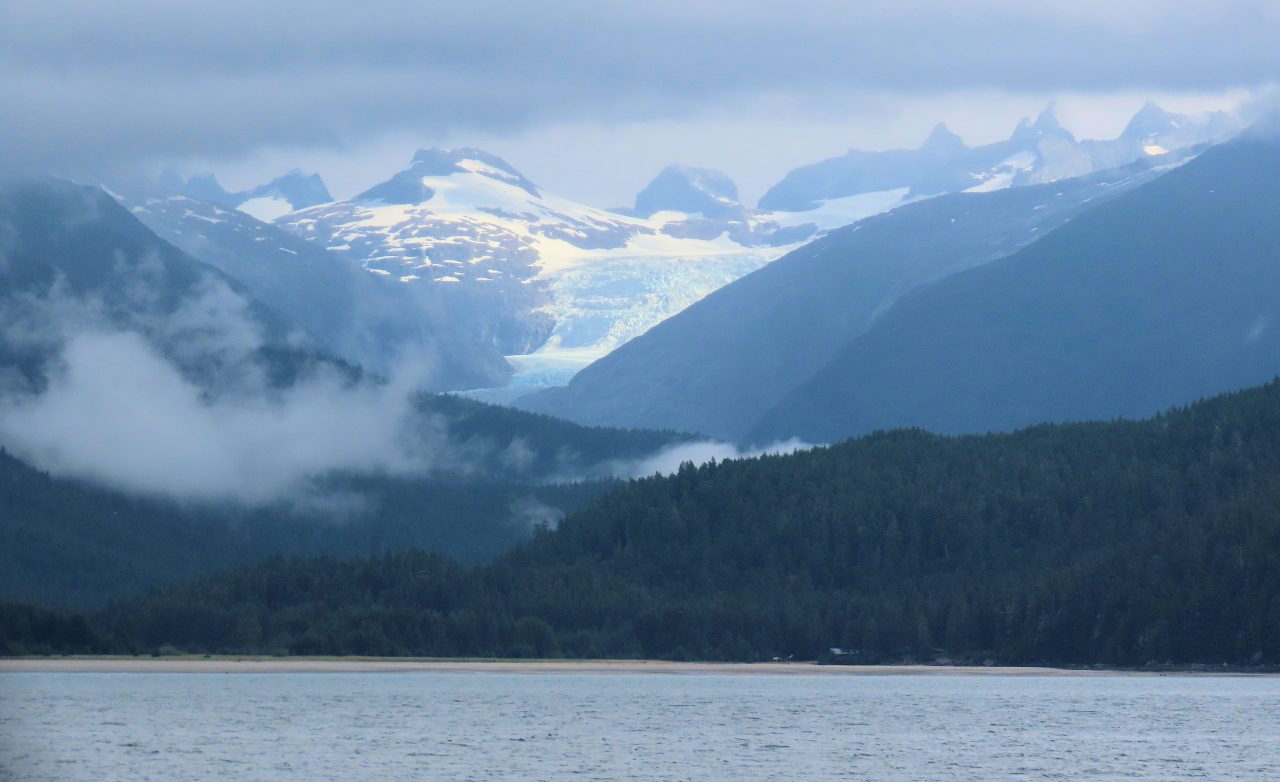
The Island

This is not one of those prompts in which you are asked to contemplate how one man is an island unto himself. Or how loneliness feels like being stranded on an island.

Unless, of course, that is what you choose to write about!

Instead I want you to think about an island you have visited. Close your eyes and picture what it looked like. The shape, size, construction of the beach. Were the shores sandy or rocky or a little of both? Were there smooth descents to the sea or sharp cliffs?

Did the waves lap like in a bathtub or crash like thunder?

Were people swimming or surfing or playing catch with dogs? Or only sitting serenely on the beach and watching?

Who was there with you? Family or friends or both? Where did you stay? If in a beach house, what did it look like? How far from the beach was it? What could you see from the windows?

If in a motel, ask yourself the same questions.

What was the town like? Was it tiny with only a few touristy shops or a huge metropolitan setting?

Make lists. Endless lists of things you saw, smelled, touched, tasted.

Think of at least one character that could populate your scene. It would be best to have two, but no more than three.

Think of the story you will tell. Will it be a romance or a horror story? Will your character meet the love of his life or be killed by a demented person?

Once you have setting and story in mind, write. Put your character in the scene and make things happen, one event after another. Keep the momentum rolling so that there is an even pace.

When you are finished, reread and edit.

Have fun with this one!

A Special Object

Think back throughout your life until you discover an object that evokes a strong sensory experience. It could be your grandmother’s apple pie, climbing a backyard tree whose bark often scratched your skin, of hearing the sound of mourning doves and thinking of a baby crying.

For me, it would be my mother’s apple dumplings. She only made them once a year, which made them all the more special. She’d sit at the table to peel and core the apples. Often my siblings and I would hover, waiting until she began slicing, hoping that she’d give us at least one. Why was that slice so special? I never understood. I think it was the simple fact that my mother did it for me.

Make a list of at least three such images. Under each record the sensory memories invoked. Try to cover all the senses, even that of time.

Your task is to then write a story, either real or make-believe, that includes that trigger. Your character has to react in a logical way. If the trigger causes fear, then write it. Joy? Show us. Longing? Let us feel the desire building to a crescendo.

When you are finished, reread or allow someone else to read it. Allow yourself to fall into that moment of time. Do your words capture the feeling? If not, then make changes.

Have fun with this one.


The Stupidest Thing

Things happen.

Zippers get caught. Drinks get spilled. The dog steals the turkey. Kids fall and break bones.

The potential for disaster surrounds us. Every step is an accident waiting to happen. Whenever we slice open an envelope or handle a piece of paper, a cut is possible. We can fall whether going up or down stairs. Step in doo-doo in our own backyard or when walking down the street.

It happens to all of us, often when doing the stupidest things.

Your characters must have the opportunity to have accidents in order to be more human.

One thing we tend to forget as writers is that comic episodes relieve tension and allow for a temporary remove from danger. As long as the comedic event doesn’t completely derail the story, readers find them refreshing.

This is your task: Think of a character whose story you are working on. Make a list of accidents that could logically happen. Try to get at least ten things on your list.

Walk away for a bit to allow these ideas to bounce around in your mind. When one of them speaks to you, then jot down, in bullet form, how you see the event playing out. Think of setting, trigger, timing, and outcome.

Also think about how it will work in your story. Will it happen in the beginning, middle or end? If in the beginning, then it sets the tone for the entire piece. Is that what you want for your story? If so, then great. If not, then bury the scene further into the action.

There is a similar problem if the event ends the story. While an upbeat ending might be what you’ve been looking for, if it doesn’t fit the tone of the rest of the story, then your readers will be dissatisfied.

Your task is to either write an original story or to rework a familiar one. Add in an event that relaxes the tension just a bit. Don’t make it too long. Just enough to change the pace.

Have fun with this one.

Family Drama

Family stories are easy to write, whether there is love or hate driving  the relationships.

Think of someone that you care deeply about. What stories could you tell about that relationship? Choose one instance that is more than just giving hugs, something with some depth to it. Using bullet points, create a list of things that happened, things that were said, things that were done, how people felt and reacted. When you are finished, walk away.

After an hour, come back to your list. Using what you’ve got, could you turn the incident into a compelling story? If not, what could you tweak in order to make it more interesting?

Your next task is to choose a relationship that it testy. Pick one that is long-standing, as that will give you more meat with which to work. As before, use bullet points to create your list, the longer, the better. Focus on the triggers, those defining elements that caused an uproar, the juicier the element, the more tantalizing the story will become.

Walk away, as before. When you return and look at your lists, which lead to the more complex story? Which story would be more compelling to a reader?

Your task is to take a character from one of your stories and create lists for that individual. Make sure that you’ve got both positive and negative relationships.

Reread a scene that you’ve written that maybe isn’t working as well as you’d like. Think about your lists. What could you insert into the scene that would add intrigue and depth?

Rewrite adding in just one element.

When you reread this time, has the story been improved? Did the character’s actions and reactions make sense? If not, then edit! Keep working at it until you’ve got the story that holds interest and adds information about your character.

Have fun with this one.

Varied Locations


Generally a story has more than one setting which places the burden on the writer to bring each place alive. One way you can do that is to plan a walkabout with camera or notebook in hand.

You might want to focus on architecture, such as the shapes of buildings, bridges, and archways. Cities generally have a mix of architectural styles since they are developed over periods of time. Downtowns are frequently the oldest part of town. What features do you see there? In San Francisco, you would see a lot of stucco facings and large, carved wooden doors. Around the doors and windows might be whirliques, demons, saints and sinners alike. If you can, walk inside and describe what you see. Marble staircases and floors? Gilded handrails? Wood flashings and trim?

If the buildings have been remodeled or replaced, massive steel and glass structures might have arisen. Step inside, keeping in mind the contrast to the old buildings that used to be there.

Cross over a bridge or two. San Francisco has two important bridges, the Golden Gate and the Bay Bridge. The first is an orange structure that connects SF to the Marin side. It traverses what would be a huge cavern if not for the bay waters far below. When you look at it, think about what stories it tells. There have been many jumpers, almost all of whom died. What would bring someone to jump off that bridge? Think of the car accidents that have taken lives. What were the drivers doing when they crossed over the separating lines.

The Bay Bridge is a modern structure with massive steel cables. It is beautiful, but is shrouded in controversy. The cost to build it went way beyond projections. Think of the story to be told about the negotiations that might have taken place. There are bolts that are rusting, causing some to fear driving over the bridge. Not that we want that to happen, but think of the fictional piece that could tell that story.

As you walk up and down the streets, look at the doors. I’m willing to bet that no two are alike. Note the colors. Do they signify anything or did the owner choose by random? Imagine the story if color meant something. Green for an herbalist, yellow for an apothecary. Red for law. Blue for police. What stories come to mind?

If you don’t have time for a walkabout, go on an imaginary one in the setting of your story. Take notes. Make lists. Come up with potential conflicts and events.

Your task is to write a scene in which the environment is crucial to the story. Don’t spend copious amounts of time describing the scene, but allow the elements to slowly come into play.

Have fun with this one.

Hiring Help

Let’s face it: things break. Sometimes, if we’re talented and skilled enough, we can fix it on our own. Many of us, however, are not so fortunate.

Water backs up into the shower. We call a plumber.

The car makes terrible noises: we take it to a mechanic.

We can’t tell the difference between a flower and a weed: we hire a gardener.

The roof leaks: we hire a contractor.

And on and on and on.

The same must be true for our characters. Problems arise that he cannot fix, so he turns to outside help.

Begin by making a list of things that your character cannot fix. Come up with at least ten. Then narrow it down to the one that would make the most interesting scene.

Your task is to write that scene. Begin with a peculiar noise or water where it shouldn’t be or bushes growing to abnormal sizes. Set the stage by letting us experience the problem through the character’s eyes. Remember to use the senses.

Once the problem has been discovered, what does she do? Does she call a relative to come over or try to fix it herself? What steps does she take in the attempted repair? Does she stand around and watch or pick up the wrench and tighten the pipes herself?

Think about how many attempts to give your character before he calls for help. If it’s more than one, show us each, allowing us to feel the frustrations that he feels.

At one point does she give up and call for help? Is it at the first sighting of problems or after many leaks sprout through the roof? After the car quits working or the tire falls off? Let us experience the attempts as well as the resignation.

Once the decision has been made to hire help, what does he do? Does he troll the neighborhood asking for recommendations or look up contractors online? How many does he call and how many proposals does he gather before deciding on the one to do the job?

Then, as the problem is being fixed, what does she do? Sit inside and drink a cup of coffee or hang around making sure that the worker is steadfast and honest with his time? Pick up the detritus as the job is being completed or watch a movie?

Sitting around would not make for a very interesting story, so be careful with this one.

Once the job is done, what does the character do? How does he feel? Does he haggle over price and the quality of the job or simply pay? Does she inspect the work and nitpick over every little thing?

You must decide, based upon you character’s personality.

So, get started with your list of potential problems, then write the scene.

Have fun with this one.


The Home Front

Your character has to live somewhere, and that place needs to be reflected in the things that your character does.

For example, if the protagonist lives in a homeless camp, then life centers on food, shelter and feeling safe, especially at night. Cleanliness is an issue as well as finding resources to help with clothes, laundry and food.

Let’s say the protagonist is a princess who lives in a castle. That’s a completely different sort of issue. How the princess treats and interacts with employees tells us whether or not she is arrogant and sees them as a subservient class. Since she doesn’t have to worry about basics, what she does do becomes a part of who she is.

If your character is a spy, then she is constantly on the move. She might not have an apartment somewhere, instead living in one hotel after another. What kinds of hotels? Cheap or deluxe? The type controls amenities and safety.

Your job is to decide where your character lives and then write a scene in that environment.  Bring in secondary characters that would be in that site. Have your character interact with them, keeping in mind what you want us to know about how he treats others.

Make the scene substantial enough that the reader gets a feel for your character’s personality. Include dialogue, body posture and looks.

Reread. Does your character’s personality come through? If not, then what changes should you make?

Have fun with this one.

Inspiration Sources

Objects hidden in drawers and closets or stuffed on garage shelves can be the inspiration for good stories.

Think about some of the things you have stuffed deep in the back of your closet. Old shoes worn on a hike to the top of Yosemite Falls? A sparkly dress from your high school prom? A pair of pants that you wore when you weighed 100 pounds more than you do now?

The stories these objects would tell are priceless.

Prom night might have been a disaster. Your date showed up late, and instead of wearing a tux, he borrowed a too-big suit from his older cousin. It hangs like a robe and in spots, is shiny from use. He wore his old tennis shoes, scuffed and dirt splotched.  No tie. Wrinkled pink-dyed shirt from when a pair of his sister’s panties went through the white wash.

At the dance, he drank heavily, spiking the punch with a flask he had tucked into his inside pocket. The more he drank, the more uninhibited his unskilled dancing became. He laughed and talked so loudly that everyone in the room heard every word he slurred out.

Or maybe you want to write about that hike. It was a gorgeous spring day with billowing clouds hovering overhead. At first the walk was a gentle climb, but as time passed, the path turned to gravel and the elevation increased. Then you hit a section a switchbacks so sharply pitched that, at each turn, you had to stop to gather breath and strength.

When you finally made it to the top, your view was blocked. A tree/cloud/crowd got in your way. Or maybe you were too afraid of heights to look out. Or maybe you collapsed from exhaustion.

Your task is to go on a search of your house or apartment. Look deep into the darkest corners. Push aside the t-shirts you no longer wear. Find one thing that carries you back into your past.

Hold it. Smell it. Cuddle it. Sit in a chair with it in your lap and feel the fabric. The stiches. The hem. The collar.

If shoes, turn them over and look at the soles. Imagine where they’ve been. The places they’ve carried you to. The troubles they’ve seen.

And then write. Tell the story. If you want, you can stick to the truth, but if you feel inspired, embellish. Add details and dialogue and action, enough to make the story interesting for others to read.

When you finish, reread. Look for areas where you can strengthen the story by subtracting, adding or replacing.

Have fun with this one!


Love Poems

Throughout all of time, love poems have been a popular form of expression whose sole purpose is to entice the desired partner to fall deeply in love with the writer.

These poems express the writer’s most intense feelings, in a way that bares the heart in raw form.

Poems can be written in free verse, meaning that they don’t have to rhyme, but are more of a stream of consciousness. Or poems can rhyme, following patterns established long ago.

It’s up to the writer.

Your task is imagine that your character is in love and wants to write something that will show how much she loves her chosen one.

Don’t worry about rhyme or meter unless that is something that you want to explore. Instead allow the words to flow freely, running down the page like a stream runs bubbling down the creek.

Have fun with this one.