Relationship with Clothes

            Think back to your childhood. What type of clothes did you wear? How much influence did you have in the purchase of your clothes? Did you have drawers full or only two outfits? Were your clothes stylish or faded and worn?

            How did you feel when you stepped out of the house? Were you ashamed or proud? Did you cover up your clothes with a jacket or strut about knowing that people were checking you out?

            Our relationship with clothes is formed in our early years. A child with few options might become an adult with closets stuffed and drawers overflowing. A teen who would only wear designer brands might choose the high-end brands as an adult.

            Your character’s preferences most likely stem from childhood options. While it isn’t necessary to detail every outfit your character wears, it is important to give readers a feel for how he dresses at varying situations.

            Your task is to write a story in which clothes are mentioned several times. Consider weather, situation and finances. Perhaps another character comments on an outfit or maybe she goes shopping and tries on dresses or slacks.

            Readers will want to see the design, the cut, the colors, the fit.

            Have fun with this one.

Inconvenient Truths

            We don’t like to hear things that go against our beliefs. We cringe when someone spouts an idea that counters what we’ve been led to be true. It might make us angry; it might make us sad. It might even make us change our minds, depending upon how deep-rooted our beliefs are.

            We all know someone who is steadfast even when confronted with verifiable sources of information. They close their eyes and ears, blocking out sources and references that present opinions different than their own. These individuals are difficult to be around. They often spew their beliefs without provocation, taking over conversations and dominating group discussions. They block out dissenting points of view and disallow attempts to change the topic.

            Your task is to write a story in which a group is gathered that includes at least one individual who refuses to accept alternate points of view. Altercations might take place in which words are flung about that are hurtful and resolve nothing. There may even be fisticuffs that result in injury.

            Setting is important. The place and event determine who is invited, how groups form and reform, and when uncomfortable topics arise. Narrative sets the tone: dialogue carries the conflict.

            Have fun with this one.

Playground Bully

Picture a school playground. Kids are running, shouting, jumping, climbing, swinging and playing basketball. Groups form then someone leaves and a new group is created. Most kids seem happy and well-adjusted. However if you look carefully, somewhere on that playground is a child being tormented.

Sometimes the tormentor is a classmate, sometimes it’s a neighbor, sometimes it’s an older child. The one given is that the bully is bigger, stronger and domineering to the point of terrifying the smaller child.

Playground bullies often grow up to be workplace bullies or domestic abusers. Their skills are well-developed by this time, so they know just the right words, just the right postures, just the right ways to belittle others into doing what they want.

Your character most likely ran into a bully sometime in his life. Imagine the story he would tell. He would speak of the terror that took over his body anytime the bully drew near. He’d tell about the ways he tried to hide, tried to brush off the comments, tried to elude by staying near a playground supervisor.

Your task is to write a story in which a bully plays a prominent role. Your protagonist can be the bully or the bullied. Dialogue and description are important for both will create the ambience needed to convey the intense feelings that the victim experiences.

Will there be a happy ending in which the victim overcomes the bullying? In which the bully is severely punished? Or will the ending be one of continued torture, not just from the playground bully but by adult bullies as well?

Have fun with this one.

Change in Routine

            Your character gets up every morning at six, showers, fixes a cup of coffee and a piece o toast, then drives to the metro station. She hops on the next train for a forty-minute ride. Before going into the office, she stops at the coffee shop in the lobby and buys a second cup of coffee, this one loaded with goodies.

            Once her computer is on, she checks for important emails that might require action. After that, she focuses on her job, ignoring conversation flowing around her until ten, her official break. Her day continues in a similar vein. Day after day, she follows the same routine.

            What would happen if her alarm didn’t go off or if there was no hot water? What if her coffee machine was broken or the train didn’t arrive? What if her coworkers gathered around her desk and sang Happy Birthday?

            How would she react to the changes?

            How we handle change says a lot about us. Some of us are quite rigid and want things to stay the same, both at work and at home. Some of us enjoy change as it adds mystic and variety.

            Your task is to write a story in which your character’s routine changes. You decide whether or not this is a good thing, whether it causes undo tension or not. Readers will want to see the “normal” world at the beginning, then witness the change and the emotional reactions that ensue.

            Have fun with this one.

Tactical Forces

            During a battle, how the military is deployed is considered using tactical forces. This includes firepower, mobility, shock value and protection. Depending upon the situation, the commanders may utilize ground forces, navies, air strikes and mobile units such as cavalry or tanks. Synchronization is required to ensure that the tactical forces have maximum impact.

            Setting determines what forces are available. In medieval times cavalry and foot soldiers would be employed, while in a futuristic story, all kinds of computer-generated weapons would be used.

            Your task is to do a little research to determine what tactical forces are logical for your story. You might want to download pictures and details into a reference folder. Find out how the weapons and units would be used, the distance in which weapons are effective and what technologies make the weapons successful.

            Next write a scene in which military forces are utilized to effect outcome in battle. You might involve a small strike team or an entire army.  The bigger the number of forces, the harder it may be to direct them in battle.

            Include dialogue even though narrative description is important.

            Have fun with this one.

The Practice of Alchemy

            Alchemists attempted to purify, mature and create certain substances that were believed to grant certain powers. Changing lessor metals into more valuable ones, such as the magical transformation of base metals into gold was one of the more popular experiments. They also worked to create elixirs to alleviate illnesses and maladies, find the secret to longevity.

            Because alchemists worked in secrecy and guarded their research, they were often thought to be working magic through the use of mythology and religious beliefs. They recorded findings in cryptic languages that needed a code to decipher. As researchers explore the roots and history of alchemy, they have begun to tie together those ancient beliefs with the foundation of modern day science and theology.

            Your task is to imagine a world in which alchemy plays an important role. Perhaps your protagonist is the alchemist, working hard in a secret location to be the first to discover the elixir for everlasting life. What does she do? Where is her secret place? Who does she share her ideas with and why with only those individuals.

            Maybe your protagonist is the adventurer who is searching for the lost histories of alchemists. Where does she go? Who does she rely on in her search? What happens to her along the way?

            Enrich your story with details that add depth to the world. Use dialogue to reveal interpersonal relationships and narration to move the plot along. Change pace. Slow things down when danger is arising and speed things up when your character is fleeing.

            Have fun with this one.

Searching for Love

            What would you do to find the love of your life? Would you hang out in singles’ bars or join a singles’ club? If a friend tried to set you up with a blind date, would you go? Perhaps you’d sign up for one of those online matching sites? If you heard about an event only for singles, would you go?

            What would you wear? Your normal every-day clothes or a fancy outfit? Hiking boots or polished dress shoes?

            Before the date, what preparations would you make? Haircut, pedicure and nails? Massage or acupuncture? Visit a mystic to hear what might happen in the future?

            Your task is to imagine that you are writing a love story. Work out the details of your character. Think beyond the physical. Consider socioeconomic, education completed, job status, living conditions and personality. What does your character want from a partner? A one-night stand or a long-term marriage? Children and pets? Common interests or differences so as to learn from each other?

            Once you’ve done all the background work, it’s time to write. Establish setting, remembering that place and time period are major considerations. Include narrative and dialogue supported by action. Will this be a love-at-first-sight story or will there be conflict before love occurs?

            Have fun with this one.

Contested Boundaries

All throughout the history of our world rulers have lead incursions into neighboring countries, seizing land, and changing boundaries in order to seize valuable natural resources or to gain access to water routes. Often the battles have been fierce with both sides losing hundreds of warriors.

To the victors went the spoils which included family treasures, verdant fields and the virginity of women. All was justified under the loose definition of what constitutes victory.

Close your eyes and imagine what that world must have been like: living in fear, burying valuables in the fields, constantly running and hiding. What story comes to mind?

Your task is to write a story in which one army invades a country.  First decide the setting, which includes place and time. Equip your army with weapons of war and then send them on their way. Will your army be victorious or not? Use narrative to describe the scene and the action, but include dialogue as well so readers can understand how your characters are thinking and feeling.

Gore is okay if that’s what you want to write, but a humiliating defeat is just as terrible without blood and guts.

Have fun with this one.

Geographical Features

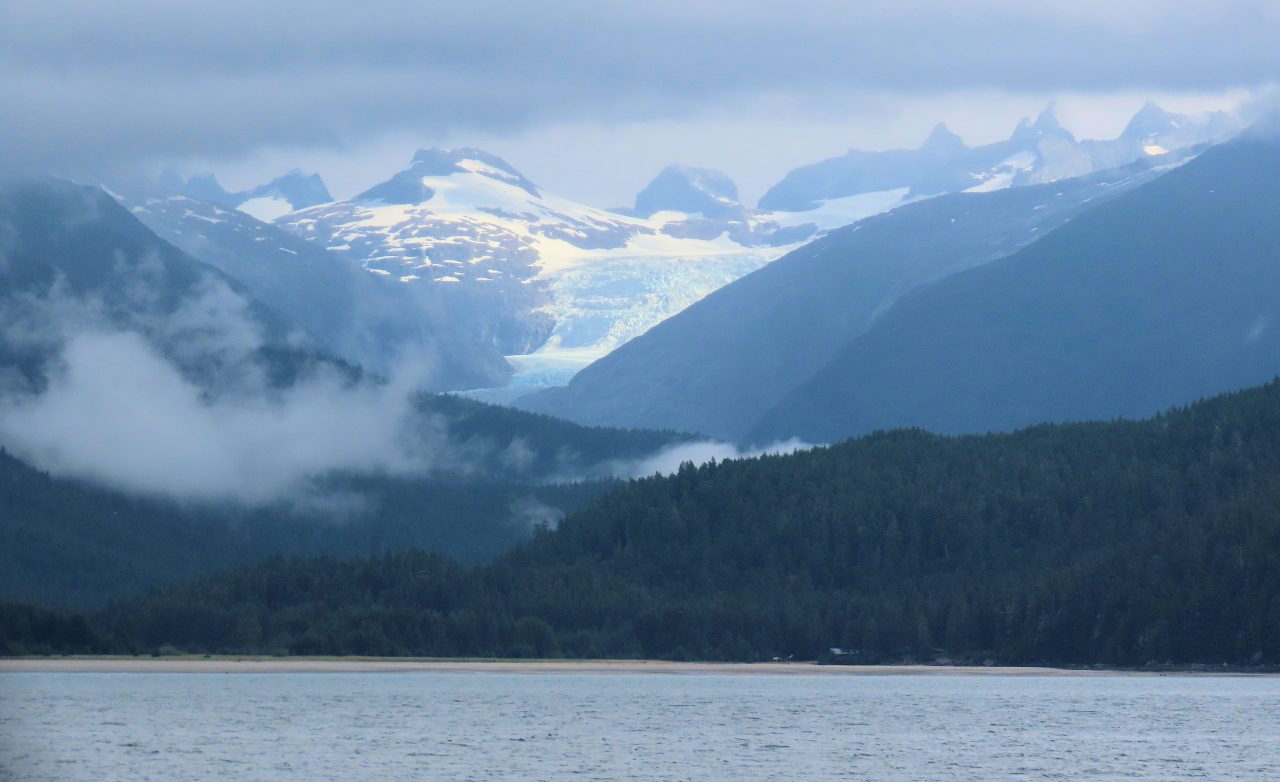
            Geography is the study of places and the relationships with the people who live there. It looks at the physical properties of the Earth’s surface and how those elements affect impact life. It concerns itself with the how and why things are distributed or arranged in particular ways on Earth’s surface and it seeks to understand how things that are located in the same or distant places influence one another over time and why the people who live in them develop and change in particular, and sometimes unique ways.

Geographical features are naturally occurring such as the composition of soil, the height, width and breadth of mountains, the types of clouds that typically form over a given area, and the presence of natural bodies of water regardless of size or shape.

The geography of an area doesn’t just determine whether humans can live there, it also determines their lifestyles in terms of available food and the types of shelter needed to survive the climate patterns throughout seasons.

Because of the impact of geography, it can play a major role in story. A scene set in the mountains of Appalachia will be completely different than one the takes place on a southern California beach.

Your task is to write a scene in which geography affects how your character lives and the choices he makes. Sensory details will be key in establishing atmosphere. Remember to include dialogue, action and narrative.

Have fun with this one.