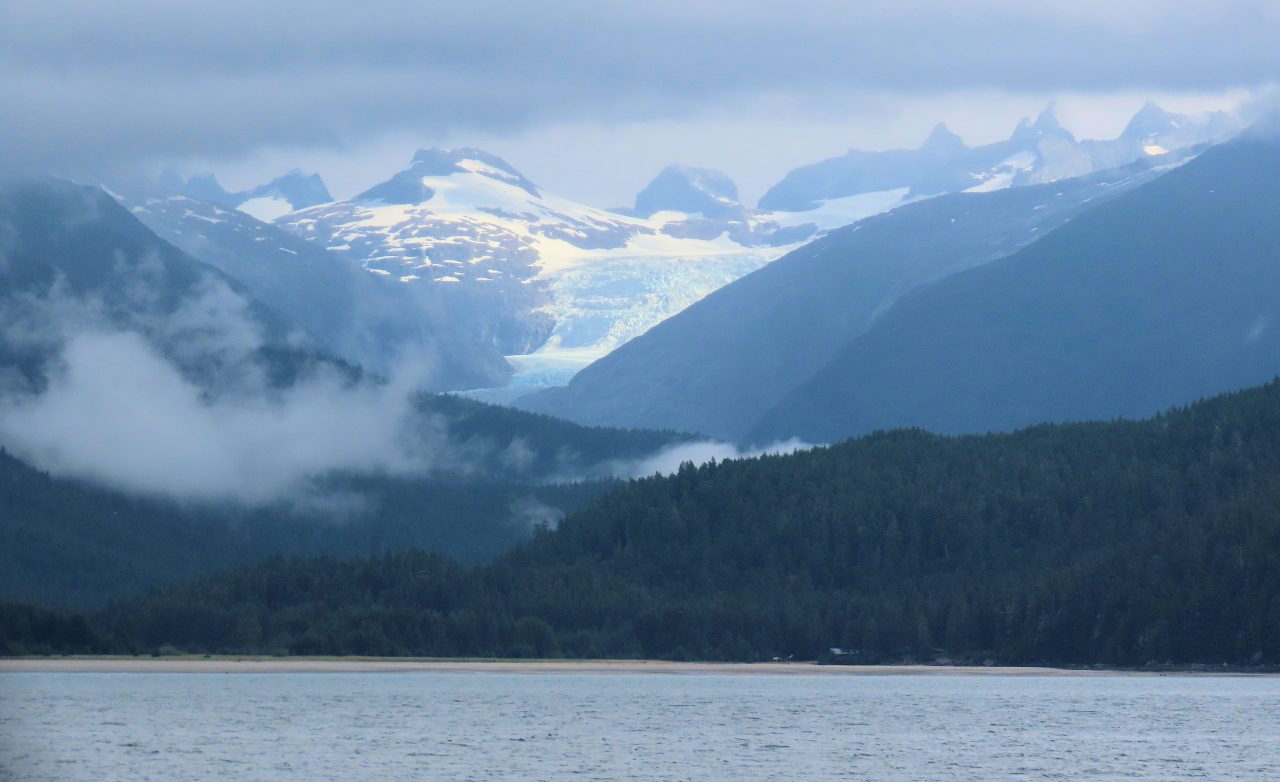
Setting Changes Affect Story

            You’ve outlined your setting including research into what it was like way back when. If lucky, you visited the cities and are familiar with buildings, streets and plants. Your plot takes the character all over that environment, in and out of predicaments determined by geographical elements.

            Have you taken into consideration how time changes the setting? Does it snow in winter, pour in the spring and roast in the summer? Is there only one season because the story is set on a planet, far, far away? If the setting changes/doesn’t change, how does this affect story?

            A time traveler might have to find clothes if they’re dropped into a winter landscape. Perhaps the desert figures significantly in the story as your character rides a camel over dunes. However, what if the story never changes location: it’s always in the same city, the same house, the same neighborhood? Change still has to take place.

            Your task is to write a story in which significant changes in setting occur that affect plot. Begin by listing those elements that would most likely happen based upon where you’ve chosen to set the scene. For example, during the length of the story will seasons change? Will a catastrophic weather event destroy homes, streets, lives?

            Once you’ve chosen the changes that can logically be incorporated into your story, begin writing. Remember to include details so that readers can “see” the changes both in nature and in terms of how the changes affect your character’s thoughts and actions.

            Have fun with this one.

The Practice of Alchemy

            Alchemists attempted to purify, mature and create certain substances that were believed to grant certain powers. Changing lessor metals into more valuable ones, such as the magical transformation of base metals into gold was one of the more popular experiments. They also worked to create elixirs to alleviate illnesses and maladies, find the secret to longevity.

            Because alchemists worked in secrecy and guarded their research, they were often thought to be working magic through the use of mythology and religious beliefs. They recorded findings in cryptic languages that needed a code to decipher. As researchers explore the roots and history of alchemy, they have begun to tie together those ancient beliefs with the foundation of modern day science and theology.

            Your task is to imagine a world in which alchemy plays an important role. Perhaps your protagonist is the alchemist, working hard in a secret location to be the first to discover the elixir for everlasting life. What does she do? Where is her secret place? Who does she share her ideas with and why with only those individuals.

            Maybe your protagonist is the adventurer who is searching for the lost histories of alchemists. Where does she go? Who does she rely on in her search? What happens to her along the way?

            Enrich your story with details that add depth to the world. Use dialogue to reveal interpersonal relationships and narration to move the plot along. Change pace. Slow things down when danger is arising and speed things up when your character is fleeing.

            Have fun with this one.

Developing a Strong Female Lead

            Cast aside the notion of the female warrior who is perfect in all ways. Your female protagonist might be athletically gifted, amazingly beautiful and displaying a lovely personality, but then she’s boring. You also don’t want to cast her as only important because she’s dating a man. Female characters, in order to speak to today’s readers, must have the characteristics of real-life women.

            What are the cultural norms in the world you have created? Are the same as the real world in which women are often seen as second-class citizens? Perhaps you’ve given the women emotional, interpersonal, intellectual and creative strengths that allow her to have goals of her own?

            Do you have only one woman in the story or several? What purpose do they serve? If they are only sidekicks to the male protagonist, rethink your story.

            Your task is to write a story in which the female protagonist has agency. She has strengths and weaknesses, she is not the fairy-tale raving beauty and she is strong in terms of how she approaches life. She does not have to be violent, but she could be if needed to advance the plot.

            If there are two female characters, try not to pit them against each other unless there is a reason to do so in order to add tension that advances the plot.

            Have fun with this one.

Stereotypical Characters with a Twist

            Picture the butler who answers the door. What is he wearing? What does he say and do? We probably all have the same image: he’s an older gentleman with a British accent dressed in a tux with tails. He instructs the visitor to go into the drawing room, and then heads off to summon his master.

            In mysteries the butler is often the top suspect in a murder. Despite the reserved image he portrays, underneath that calm lays an angry, vengeful man.

These are stereotypical characters because they are flat people that fill out the cast. They generally appear in quick bursts then drop into the background. Throughout the telling, these characters exhibit little or no growth and have limited impact on the story arc.

            Now picture the lowly farm boy toiling in the heat of the afternoon dredging soiled hay from the horses’ stalls. What is he wearing? What does he say and do?

            What if the butler gets fired and has to become the lowly farm boy? What if the farm boy is actually the son of a prince in a faraway land? Because the farm boy and the butler experience life-changing events, their impact on the story has gone from being minimal to critical.

            Your task is to write a scene in which what first appears to be a stereotypical, flat character and offer a twist in the plot that belies what the reader thinks to be true. You can use the characters mentioned or introduce a different one. For example, what if the wise old woman lacks skills to be a mentor or the orphan who is thought to be the descendant of royalty really is just a street kid?

            Have fun with this one.

Life’s Journey

            Characters are a product of their life’s experiences. The things they seen and done are major influencers in who they are at the time of the story. From birth, the people in their lives affect what they believe, what foods they eat, the clothing they wear, the attitude to education that they have.

            Imagine a character who grows up in a loving, fostering home. His attitude toward obstacles life presents will be completely different from obstacles that pop up in the life of someone who was abused in some way. It makes sense. In the first situation the character might love challenges and new experiences while the second individual might be fearful and prefer hiding at home.

            When you create a character you need to construct their life’s journey as a background into who they have become. This is different from a character arc. The arc traces the character’s trajectory throughout the story, encapsulating the events that change her as the story progresses.

            The life’s journey shows the path that she walked as the years passed by.

            Your task is to create a life’s journey for a new character that you would like to include in a story. Graph paper might be the best source as it allows for increments of time spaced out in measured blocks. Start at a point when they first event occurred. This could be birth or the first day of school. Add elements that played important parts, both negative and positive.

            When finished, using the data you’ve detailed, write a memoir-like story of his life.

            Have fun with this one.

Contested Boundaries

All throughout the history of our world rulers have lead incursions into neighboring countries, seizing land, and changing boundaries in order to seize valuable natural resources or to gain access to water routes. Often the battles have been fierce with both sides losing hundreds of warriors.

To the victors went the spoils which included family treasures, verdant fields and the virginity of women. All was justified under the loose definition of what constitutes victory.

Close your eyes and imagine what that world must have been like: living in fear, burying valuables in the fields, constantly running and hiding. What story comes to mind?

Your task is to write a story in which one army invades a country.  First decide the setting, which includes place and time. Equip your army with weapons of war and then send them on their way. Will your army be victorious or not? Use narrative to describe the scene and the action, but include dialogue as well so readers can understand how your characters are thinking and feeling.

Gore is okay if that’s what you want to write, but a humiliating defeat is just as terrible without blood and guts.

Have fun with this one.

Geographical Features

            Geography is the study of places and the relationships with the people who live there. It looks at the physical properties of the Earth’s surface and how those elements affect impact life. It concerns itself with the how and why things are distributed or arranged in particular ways on Earth’s surface and it seeks to understand how things that are located in the same or distant places influence one another over time and why the people who live in them develop and change in particular, and sometimes unique ways.

Geographical features are naturally occurring such as the composition of soil, the height, width and breadth of mountains, the types of clouds that typically form over a given area, and the presence of natural bodies of water regardless of size or shape.

The geography of an area doesn’t just determine whether humans can live there, it also determines their lifestyles in terms of available food and the types of shelter needed to survive the climate patterns throughout seasons.

Because of the impact of geography, it can play a major role in story. A scene set in the mountains of Appalachia will be completely different than one the takes place on a southern California beach.

Your task is to write a scene in which geography affects how your character lives and the choices he makes. Sensory details will be key in establishing atmosphere. Remember to include dialogue, action and narrative.

Have fun with this one.

Anticipation

Your birthday is coming up and you’re aware that a party has been planned. You think you know who’s coming, you wonder if Jesse, a childhood nemesis, will have the audacity to appear.

Anew job opportunity has opened up and if you’re offered the position, it means more money and responsibility, but you’ve got to ace the interview.

There are many events that arise in our lives that cause angst. The anticipation alone makes us sweat, interferes with sleep, and causes our hands to tremble. We rehash possible negative outcomes, analyzing each reaction that we might have.

Anticipation is a complex emotion. It is a feeling of excitement about something that is going to happen in the near future that leads to restlessness, difficulty focusing, a sense of uneasiness, and an attempt at avoiding participation in the event. In story form, anticipation can trigger scenes of tension and conflict between characters that alter familial relationships and ruin friendships.

Your task is to write a story in which anticipation plays a major role. Choose a scene in which emotions run high, affecting how the character thinks, acts, speaks. Include narrative and dialogue so that readers can see how anticipating the event influences the story arc.

Have fun with this one.

Choosing the Time Period

Every story exists within a particular time period. Historical novels are normally centered in the past, ranging from the earliest days of man to the near present. Think cave men and last year.

Futuristic stories might be on Mars after its been settled, on a spaceship as it zooms toward a distant planet, or on Earth after an apocalypse.

When a story occurs affects weather, clothing, buildings, communication systems, all kinds of infrastructure issues and many more. If you’re an expert on a particular era, perhaps you don’t have to research to get information, but most of us will have to spend a substantial amount of time gathering data.

Your task is to write a story that takes place in a time period other than now. Begin by listing three different ideas that intrigue you. Choose the one you will enjoy learning more about. Research until you come up with enough information to develop your world.

Include sensory details so that your readers will grasp when and where the events take place, but be careful not to employ an information dump to do so. Weave together story and details, dialogue and narrative.

Have fun with this one.

Code of Conduct

A code of conduct is a set of rules that outlines the norms of behavior, the responsibilities and proper practices of an individual within a society or organization. It sets what behaviors are considered acceptable and which are not. Many of these are written in the form of laws for which punishments are enacted if an individual chooses to break the code. However, many are unwritten, such as not spitting on the playground, cleaning up after yourself and not trampling the flowers in your neighbor’s garden.

Knights of yore had codes that defined behaviors that they couldn’t do, such as not slaughtering civilians, taking care of their steeds and those of their opponents when captured, and communicating effectively for the benefit of all. They also couldn’t make an opponent suffer needlessly and if someone, even a brethren, was fleeing, to kill them swiftly and mercilessly.

Your task is to list a series of codes of conduct for your society. Once you have a sufficient amount, you will write a story in which someone breaks the code. The offense could take place within a powerful modern-day company or in a fantasy world based loosely on the Middle Ages.

Once the code is broken, what happens next decides where the story goes. The offending person could be your protagonist who willingly made the choice because it conflicted with a personal belief system or it could be an entire army that refuses to follow a command that it deems offensive. Conflict arises which leads to tension. As it is resolved, your protagonist might have to make decisions affecting her ability to survive.

Have fun with this one.