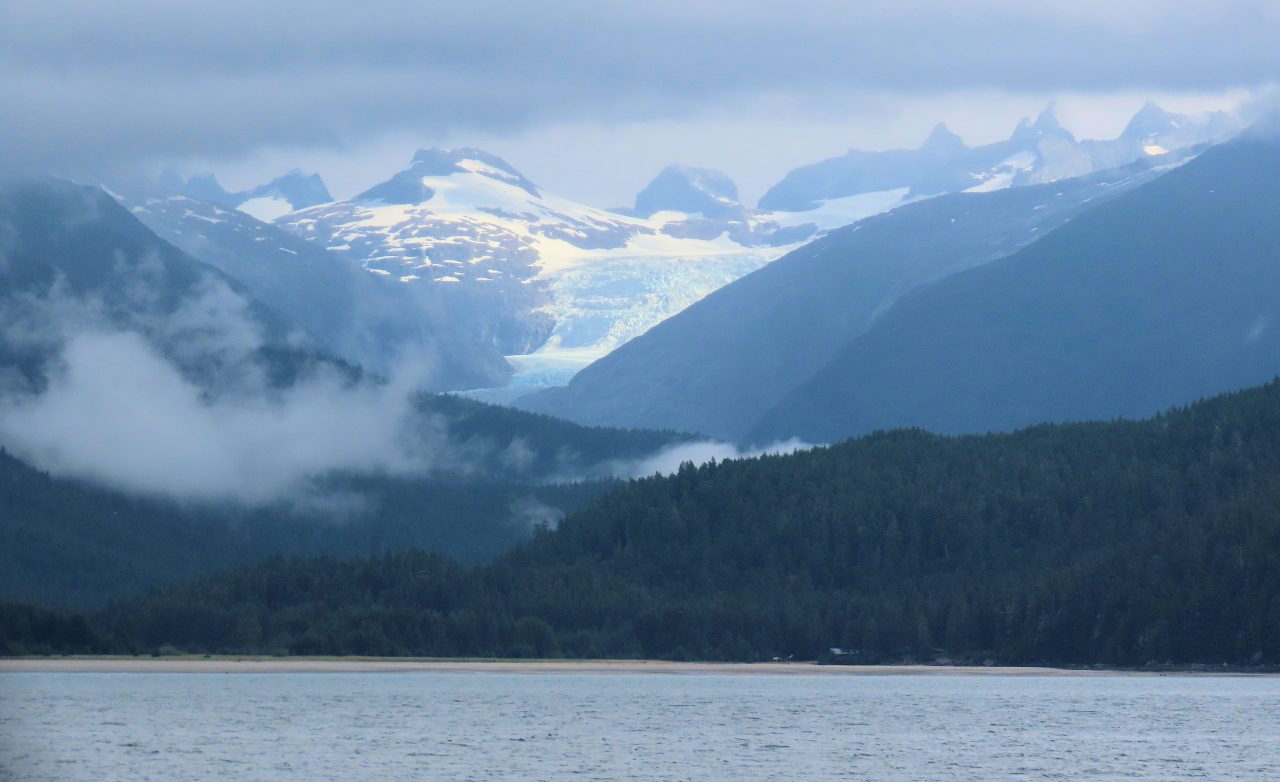
Wild Weather

The skies are gray and the wind is howling. Torrential rain/snow/sleet/hail is expected to fall. Trees might topple. Power lines will be downed. Roads will close.

But your character has to go somewhere. It could be to work, to the mall, to an appointment. What does she do? Does she cancel/call in/change plans? Sit at home with a cup of coffee and a good book? Or does she go outside and risk being caught in the storm?

Taking off work might not be an option. Many people do not get days off due to wild weather. They have to risk the elements or possibly lose their job. Is your character one of them?

Your task is to write a weather-related scene in which your protagonist is forced into making serious decisions. It would make a great story if the character goes outside and is subjected to the weather. Think of all the possible things that might happen! The list is endless.

Have fun with this one.

Making New from Old

You have to admit that the old stories are great. Think how many Disney has turned into marvelous cartoons that intrigue young and old.

Those classic fairy tales hold our interest as average people battle monsters, overcome obstacles, fall in love with beasts who turn out to be wealthy men, prick their fingers on thorns and try to climb the tower to get to the beautiful blonde.

The musical Into the Woods combined together as many fairy tales as possible into one rollicking story.

Imagine taking your favorite story of all time and retelling it. Change the characters names. Change the setting. Maybe add a twist to the story by making the male protagonist female and the evil witch a terrifying wizard.

Your task is to do just that.

Begin by making a list of five fairy tales that you know well enough to rewrite. If you can’t think of any, visit the local library and read a few.

Narrow your list down to the one that you think you could have the most fun with.

Remember to incorporate those issues that society still cares about: poverty, war, race, gender. Also update the story by giving it a contemporary setting with those things that are so important in our lives: technology, politics, and the ways that those two consume our attention.

Don’t forget the key elements of relationships, mood and theme.

Have fun with this one.

The Dating Ritual

Do you remember your first date? How old were you? Where did you go?

What was your reaction when you were asked out? Did your heart palpitate? Your breathing increase? Your cheeks flush?

Think about the process of dating. First looks. First impressions. Making contact. Deciding whether or not there is potential for a relationship. Repeated dates and encounters. Still deciding.

Just as real people go through the ritual, so must your character, especially if he is single. He searches for a possible mate. He finds one, woos her, asks her out.

In today’s world, women can also be the pursuers. She can make contact, initiate communication, make decisions. Make the first moves.

Your task is actually quite simple. Write a scene in which your protagonist is searching for love. First of all, decide where this search will take place. In a bar? Nightclub? Office?

Then decide what the person looks like, acts like, sounds like. What is the attraction? Be clear about that. The other cannot be dressed like a slob, stagger around drunk and burp loudly sending alcoholic fumes everywhere. Instead, what characteristics appeal to the seeker?

In your scene they will make contact, which means writing dialogue. Make it realistic. What would two strangers say to each other in order to sound appealing?

As the dialogue develops, allow the two to find interest in each other. How is that displayed? How does that alter dialogue?

Finally, write the end of the scene, when they part. What happens? Is there a hug or handshake? An exchanging of contact information? A kiss? A slow dance before the night ends?

Have fun with this one.

Friendship

Friends are important. Let’s face it, without friends, our lives would be pretty boring.

Think of all the things we do with friends. It’s not just about talking, but helping in times of joy and sadness, being there in times of need, offering support to clean out the garage, take rubbish to the dump, or even washing the car.

We rely on our friends to give us rides when our car is in the shop or when we are going to the airport. We offer our thoughts and prayers when they are hurting and they do the same for us.

There are fun things we do together that span from luxurious vacations to a simple lunch out at a fast food restaurant.

Because we need friends, so do our characters.

Your task is to create a few profiles of potential friends for your protagonist. Make a list of five different character types. Make another list of things the two have in common. Match up one character type with one commonality.

Take something you’ve been working on and write a scene in which the friends interact. Be sure to include dialogue, because one thing that friends do is talk.

Have them walk about, see things, do things, eat things. Have them share ideas or secrets or concerns.

Most importantly is that they spend quality time together.

Have fun with this one.


Food Favorites

We eat. So do our characters. We have favorite foods, go-to foods, emotional eating foods and so on. So do our characters.

At some point in any story, our characters must consume a meal. Sometimes it’s fast food, sometimes fine dining, sometimes in a chain restaurant, sometimes in a family-owned establishment. No matter the place, they have to eat.

Your task is to write a scene in which your character eats something. To do this, first construct a list of preferred foods and places where these items can be purchased. Make sure to include a variety of establishments so that your character has options.

Once you have your list, narrow it down to two choices. Any more than that and the scene becomes unwieldy.

Put your character in motion. At some point he has to stop to eat. He can dine alone or with others. It can be a hot date or an office gathering. She might go out with friends or eat with family.

When you write, remember to have your character think about the food. This includes taste, smell, texture and feel. If she eats something slimy, write about it. If it’s crunchy, describe it. If it has a strong odor, include that detail.

Also consider your character’s reaction to the food. What if he tries something for the first time and it nauseates him? Write about it. What if the meat is tough as leather? What does she do with it?

Have fun with this one.

The Unlikely Protagonist

We like happy people. We love a satisfying ending to an intriguing story. We like to follow the lives of ordinary folks who face struggles, but in the end, come out feeling good about themselves.

What happens when the protagonist is none of those? What if she is a miserable drunk? Drug addict? Sex slave?

What if he is an abuser, a bully, a swaggert?

These are not your typical protagonists, but think of the stories they can tell.

Imagine the drug addict confronted by the abuser. Think of the potential conflicts. Think of the drama.

Change things around. What if the bully is also a miserable drunk who takes advantage of sex slaves?

Your task is to create the unlikely protagonist. Begin by making a list of all the character flaws that make the person unlikable. Narrow it down to the most alarming of them all.

Think of the story that this character tells.

Your task is to write the story, staying as true to the nature of your character as you can.

Have fun with this one.


Addictions

Addictions interfere with our lives. Drugs and alcohol impair our ability to function normally, to concentrate, to process and hold on to information.

Going to work under the influence, if caught, could lead to termination. Driving can cause death to innocents.

Imagine the impact on relationships, unless the partner also abuses.

These are the things that we must consider when crafting characters.

Is your character an addict or a one-time user? Does your character hang out with users or avoid users? Does your character occasionally use drugs or alcohol or take part on a regular basis?

Your task is to create a character and then decide how much of an addict, and addicted to what, that individual is. Write a scene in which the reader sees the character either avoiding substances or taking part.

If you are not familiar with how someone under the influence of a particular drug might act, do some research. You want your character’s actions to be as realistic as possible.

Have fun with this one.

Traveling Incognito

We are many different people.

At any given time we might be walking around as an employee at a job that we hate/love.

The next moment we might get a troubling phone call about our child, and then we put on our parenting hat.

Or maybe it could be a message from a spouse, telling us that he/she just got promoted/was in a car accident/got good news from the doctor.

We could be an exercise nut on weekends or avoid exercise at all costs.

We might be a meat lover or a vegetarian or maybe a little of both.

We might love to play board/card games or hate any type of game.

We could be a reader of books/newspapers/magazines or only watch television.

We might be addicted to our devices, spending hours reading postings, or we might not own a single portable device, including a cell phone.

Because we change from day to day, hour to hour, we must consider that our characters also change. If she doesn’t, then she won’t be interesting to follow. A flat character does not invite tension, and every good story needs tension to pull the reader along.

Your task is to either create a new character or pull up one that you think might benefit from a little expansion.

Make a list of all the different disguises this character wears. Narrow the list down to two or three that you could comfortably fit into a scene.

Write that scene, keeping in mind that with each step a character makes, the hat changes.

Have fun with this one.

Give Her Wheels

Our characters move from one place to another. How do they accomplish this?

Sometimes they walk, but not always. Walking only gets you so far, even if she lives in a big city.

At some point she will need to travel further distances. How will she get there?

Usually on wheels. City bus, subway, bicycle, taxi all have some type of wheel.

Our characters need to travel, need to venture outside of the home unless he is agoraphobic, and so at some point must get in a vehicle.

Your task is to think about a character that you are using in a story. Make a list of the means of transportation that he could use. List as many as are plausible.

Next to each mode, write a reason for using that method of transportation. For example, going to the doctor, getting to work, visiting friends.

Narrow down your list to the one that makes the best story. Think in terms of dramatic scene. What could happen while on the bus? Riding in the car? Pedaling a bicycle down a country road?

Now write that scene, keeping in mind that your reader needs to be there with your character, feeling what she feels, seeing what she sees and experiencing everything through that character’s senses.

After you’ve written the scene, reread and edit. What do you think? Does your writing help you to travel next to your character? If not, then go back.

Have fun with this one.

One Day to Live Again

If given an opportunity, which day in your life would you choose to relive?

Is there a time that you said or did something that you regret? If so, what would you do differently? How would this change the outcome?

We all do things that later cause us grief. It might have been a snide comment in response to being treated poorly by a friend or family member. It might have been an act as simple as not dividing the cake into equal portions and giving someone you were angry with the smallest piece. Granted, this is not a huge event, but it speaks to an underlying tension.

Your task is to write from the heart. Recall a situation that, if given a chance, you would do differently. Begin with the scene. Put us in the moment, whether it is a situation at work or an encounter in a coffee shop.

Choose your character. It can be first person or third. If third, keep the character’s actions as close to what really happened as possible.

Put things in motion. Try to recall the things that were said, the emotions, and the reactions.

Think about how you felt after it was over. For how long were you in remorse? Write about that feeling, wishing that it had never happened.

This will not be a fun activity, but one from which you can learn. Your characters say and do things that they should regret.

Good luck with this one!