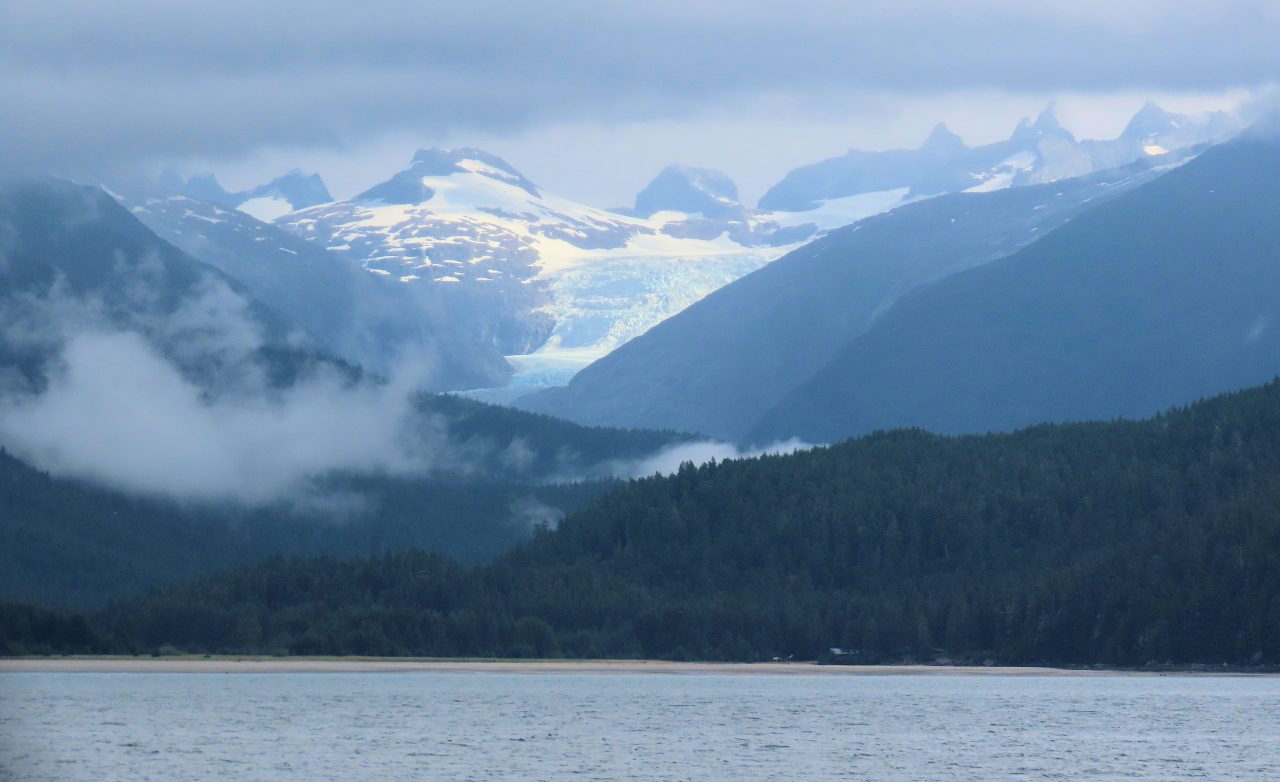
Comfort Zone

The vast majority of the time we stay within our comfort zone. At our jobs, we feel comfortable when we understand our job duties. After work, we have safe places to go where we feel respected.

When we venture away from home on a vacation, many of us return again and again to the same place because we find comfort there. Sometimes opportunities arise to go somewhere new, and we might, at first, want to go, but as the departure time approaches, we get nervous.

Stepping outside our comfort zone can cause a great deal of anxiety. We check maps over and over, wanting to make sure that we know the way. If we venture overseas, we might choose trusted tour company so as to ensure a clean and safe place to spend the night.

Your task is to take a character outside of his comfort zone. Send him to places unknown, have him try out new restaurants, or visit countries he’s never seen. Along the way have him encounter strangers, deciding in each instance how he will react.

What impact does journeying have on your character’s personality? Does he feel emboldened? Frightened to the point of desiring only isolation? Proud or timid?

Write a scene that challenges your character to step outside of the norm.

Have fun with this one.

Fantasy Worlds

Some writers find it easy to create worlds from the ground up. They design mountains, valleys, forest, rivers and lakes, cities and villages. They populate their worlds with people who are like us, as well as with those having superpowers.

There are languages and clothing and foods that suite that world, perhaps even as identifiers of their position in society.

Just like in our world, some in the new world will be peaceful, others warlike. Some meek, while others aggressive. Some are masters of yoga, while fight with weapons.

Your task is to design a new world. Draw the outer borders. The seas and mountains. Inlets and ports. Where resources are found. Where are the farms and ranches?

What type of government is there? How do individuals get in power? Are they compassionate rulers or despots? What are the main rules that impact ordinary citizens?

How do the different peoples get along? With understanding or with conflict?

When you are finished, look back at your design, paying attention to what should be added as well as what won’t work or those things that need to be change.

If you have a storyline, start writing!

Have fun with this one.

Lean into the Possibilities

            Did anyone ever doubt that you could become whatever you’d dreamt of accomplishing? How did that make you feel? Did it stop you, delay your achievement, or did it inspire you to prove them wrong?

            One thing we seldom hear is that we all need to lean into our possibilities, not shy away from them. Let’s say you want to be a doctor, but can’t keep up with the grueling pace of coursework. You still want to help people, so you change paths and become a nurse.

            You’ve leaned into the possibilities, by finding a course that works for you.

            Your task is to write a story in which your protagonist has a desire to be or do something huge, something that will define who he/she is.  Add negative or discouraging voices. Give your protagonist hurdles that have to be overcome. Setbacks add tension. But most of all, we want to see her choosing possibilities that work for her.

            Have fun with this one.

Something to Fear

            Everyone is afraid of something. It might be failure or of being left out. It could be heights, spiders, or driving on freeways. Some are terrified of crowds, especially after the pandemic.

            Using fear as a trope can lead to interesting stories, especially when the antagonist is quite terrifying to behold in terms of appearance as well as behavior.

            Your task is to write a story in which fear is the predominate emotion. Begin by creating a list of possible things to fear, thinking outside the box: nothing triggering, such as a fear of clowns. Then imagine the setting in which the story takes place. It could be the principal’s office, a cabin in the woods, a crowded shopping mall.

            Consider first person POV so that readers will experience everything through your character’s emotions. Next, think about changing perspective, writing in the voice of the person who causes the fear. How does this alter the story? Or, perhaps write in the eyes of a bystander who witnessed the event.

            Have fun with this one.

The Grab Bag

            Many times events such as carnivals and fund-raising events sell tickets for an opportunity to stick your hand in a bag and pull out a prize. Imagine what emotions your character will experience contemplating putting their hand inside a closed-off bag or box.

            He might be a bit scared, wondering if he’ll touch something slimy or gooey. Or he might be in for the fun, no worries, no concerns.

            Perhaps he’s got a few friends watching. Imagine what they’d say, how he’d react. Is he the kind who accepts friendly ribbing or would he get angry?

            When his fingers touch whatever is there, what reactions does he have? Does he make a face or laugh? Retract his hand without taking anything?

            Your task is to write the story of the grab bag.

            Establish scene and circumstances through a few descriptions of setting. Identify major characters though one of two details at most. Let there be dialogue.

            Have fun with this one.

The Photo Shoot

            You pick out a place you’d like to visit, primarily due to the awesome pictures you imagine capturing. Perhaps it’s Yosemite or Rocky Mountain National Park.

            You make reservations, pack your gear, and take off.           

            Your task is to write the story. Setting is obviously crucial, so include as many sensory details as make sense. Readers will want to see what your photographer sees, hears, smells, and possibly even tastes.

            What does she focus on? Mountains or waterfalls? Flora or fauna? Rushing rivers or quiet ponds?

            Does your protagonist use film or digital? Work in color or black and white? Maybe even sepia tone. How does she frame the photos? Is the mountain top dead center, or off to one side so she can include a herd of deer grazing at the base? Does she capture the rock climbers or big horn sheep?

            Do any passers-by interact with your character? What questions do they ask?

            Have fun with this one.

Startling Sounds

            Picture yourself sitting before the television, engrossed in your favorite show. A loud boom shakes your house, rattling the windows and causing your heart to seem to skip a beat. You consider investigating, but when no sirens sound, no knock comes to your door, you shrug it off.

            Now imagine that the sound, that boom, caused things to fall off shelves, your floor to rock and roll, and sets off car alarms up and down your street. What do you do now?

            Your task is to write a story in which a sound or sounds plays a major role. First identify the source of the sound, then the effects of the cause dependent upon how close your protagonist it to the source.

            Take into consideration the reactions of your character. Some people startle easily and once shaken, take a long time to recover. Others are curious, might investigate, then do some online research to see if any reports have come in. Still others will do nothing, not wanting to get involved.

            Choose a reaction that will interest readers the most. Tension is critical, so include dialogue as a mode to illustrate what and why your character acts.

            Have fun with this one.

Star-Gazing

            Try to think back to times when you looked up and saw the sky filled with stars. Who were you with? Where were you? What did you see and what impact did it have on you?

            Did you tell anyone about those times? If so, who did you tell and what words did you use? Were they excited for you or waved it off?

            Your task is to write a story that involves star-gazing. Your protagonist might be a novice, not knowing the names of constellations or having never seen a shooting star. Or he can be an expert, someone who has studied the skies for years, perhaps even teaches others.

            No story is complete without tension, so something has to happen that prevents the protagonist from getting what he wants, or doing what he wants. Use setting and dialogue to drive the story forward.

            Have fun with this one.

Unusual Meal

            Think of a meal you planned for a group. Most likely there were appetizers, a main course that consisted of a variety of dishes, followed by dessert.

            The quantity depends upon how many invited. If it’s a meal for two, you didn’t need large dishes. But, if you invited ten, then you need casseroles, cakes, and bowls of fruits and salads.

            Your task is to write a story in which your character prepares a most unusual meal, one that consists only of desserts.

            Perhaps there are cupcakes in the shapes of stuffed mushrooms and cookies that look like crackers layered with slices of cheese. The entrees are pies that resemble different types of pizza and cheesecakes molded into meatloafs.

            Imagine what the guests will say! In your story, show your character cooking the items as he talks to someone. Through dialogue we see into the protagonist’s mind as she explains what she’s doing and why.

            Descriptions will show the setting, which includes the table, decorations, and the overall depiction of the room.

            Have fun with this one.

Roadside Meal

            How many times have you been away from home and stopped to eat? What types of places do you normally choose? Fast food chains? Sit-down restaurants? Or something in between?

            When you scan the menu, do you have go-to preferences? Some go for hamburgers, while others choose salads. Some like sweet potato fries, eggs over-easy, chocolate cream pie.

            Your task is to write a story in which your character is traveling and stops for a meal. Depending upon the restaurant, she either reads from a menu board or from a handheld menu.

What does she order? Is it served cold or hot? How does it taste? From her reactions, you tell if it’s as she expected and whether or not she’s satisfied.

If there’s waitstaff, when someone checks in, your character responds by saying what she likes or doesn’t like, whether she’s satisfied or might like to order additional items.

To make it interesting, have someone strike up a conversation with your character. A little tension builds because this person is annoying or clinging and doesn’t take the hint that she’d like to eat alone.

Have fun with this one.