Exploring

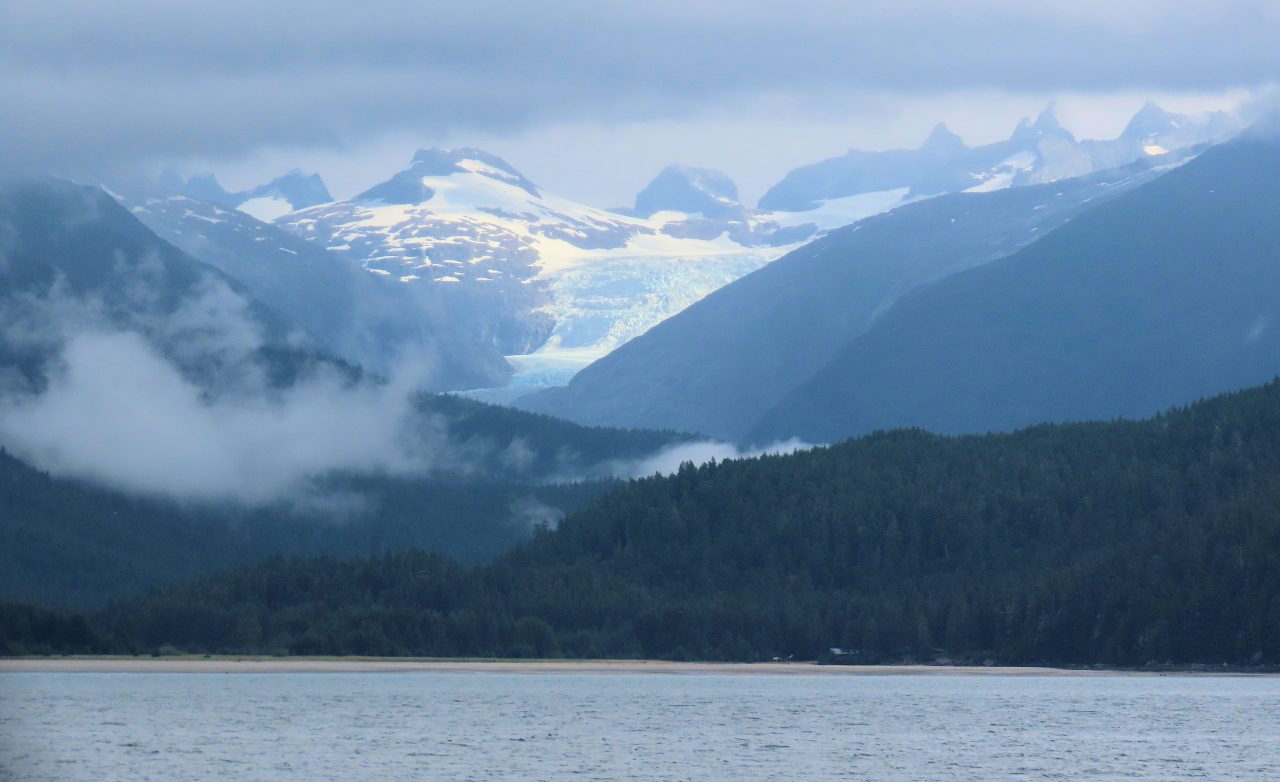
Today I flew in a tiny propeller plane high over and through the mountains of southern New Zealand. I was terrified until we were in the air and then I relaxed and enjoyed the view.

Your characters also need to try new things. With your character in mind, make a list of things she might be afraid to do. Think extreme, such as jumping off a bridge or letting a tarantula walk on her arm.

Next imagine how he would behave just imagining the experience. Think fear, terror, panic, anxiety.

Write the scene using descriptions that let the reader be with your character.

Have fun with this one.

On Vacation

Since I am on vacation, it got me to thinking about our characters. They go places, do things, see things.

Why not send them on a trip? Design the vacation to fit her personal interests.

For example, if she loves Shakespeare, why not go to London?

If he’s into wine, then off to California’s Napa Valley.

Your task is to write a scene in which your character travels. Choose a location that you’ve been to so that you can speak with authority.

Have fun with this one.


Character Strength

Recently I had a bout of pneumonia, followed by an asthma attack. It has left me weak and tired. I am not able to do much in any given day.

This has led me to think about strength, in all its various forms.

Physical strength is what usually comes to mind first. It is a truth that some people are stronger than others. We hear stories about individuals who, in times of need, lift one end of a car up in the air. There are those who are required for a job to display prowess in a challenge, such as a rope course or an obstacle course in order to be accepted into the military, fire or police departments.

What about emotional strength? I’m the type who cries at anything. Cute kittens, cartoons, a love scene in a movie, all bring me to tears. But I am strong in that I have been able to overcome doubters, people who said I’d never graduate from college, or ones who doubted by husband’s love. I’ve stood up to bullies as a teen and as an adult.

But I’ve known individuals who backed down whenever threatened. Who refused to fight for their rights or speak up when denigrated by a boss.

Stop and think about one of your characters. What kind of strength does he/she have? There has to be something or your character will not be able to carry the weight of a story. No one wants to read about a weakling, a whiner, a defeatist.

Read a section of your story. Find instances where your character shows strength, or, if no strength exhibited, places where you can make slight changes to give your character the skills he/she needs to stand up to the world.

Rewrite a scene or two. Then reread. Do you sense the difference? How do you feel about your character now? If nothing changes, then rework the scene.

Have fun with this one.

What to do at Night?

Our characters don’t just move around in the day time. And they don’t just curl up and go to sleep when the sun sets. They do things.

If they’re young enough, they might go to the park and hang out. They might go to parties, football games or visit friends.

As young adults, they might go to clubs and dance. Attend concerts and go to the theater. Dinners with friends and coworkers. Sit at home and cheer for favorite sports teams.

Once we have kids, activities center on gymnastics, swim lessons, school performances and religious functions. We go to playgrounds and parks. We hang out with couples with children, leaving behind single friends. We go to pot lucks at the swim club and monitor bingo as a fund raiser for the school.

And as we get even older, we settle down. Curl up with a good book at night. Watch TV. Go to movies on Senior Day. Lunch at the Senior Center.

We stay busy, well into the night. So when you write, make sure that your character has places to go and things to do.

Your task is to write a scene that takes place after school or after work. Surround your character with friends. Write engaging dialogue. Make things happen that are interesting to read. Be logical and realistic in your approach. When you are finished, reread and look for places to add detail that enriches the scene.

Have fun with this one.

Pet Ownership

How many people do you know that currently own a pet or have had a pet in the past? I bet it’s a huge number!

People are funny about their pets. They talk to them as if they understand every word they use. They feed them premium food, often times, in the case of a poor senior citizen, better food than they eat themselves. Some dress their pets in fancy clothes and take them to fashion shows.

Some train their pets for protection, while others are looking for companionship. Many pets are like children, pampered and petted and loved.

But there are also cruel, inhuman owners who abuse and neglect their pets. They confine them to shabby, filthy, disgusting cages. Breed them and keep every last cat or dog until the house/apartment is so congested with animals that it’s impossible to keep clean. Some beat their animals, starve them, burn them  and then abandon them along highways, not caring if they get run over and killed.

Does your character currently own a pet? What kind and how is it treated?

One way to give hints as to a character’s personality is through pet ownership. For example, there is a woman in my neighborhood who walks her cat every day, wearing a halter and leash. Sometimes the cat is draped over the woman’s shoulders. It’s obvious from the way they interact with each other that there is love.

Your task is to write a pet into your story. First, decide what type of pet. Is it a tarantula or snake? That would repulse me. What about a hamster or guinea pig that escapes on a regular basis? That happened in our house.

If you select a dog, what breed and what is the purpose of the dog? How does the owner interact with the dog? Does he pet it often? Take it for walks? Brush and comb it? Let it share the bed or sleep on his lap?

Or is the dog kept outside no matter the weather? Given food in an indifferent manner? Allowed to roam the grounds with the expectation that it will bark, growl and attack an intruder?

You’ve got a lot to think about.

Have fun with this one.

Weather Affects Story

This morning when I got up, a dense fog obliterated my view of the house across the street. If I had driven somewhere, it would have been perilous.

The fog reminded me that our characters’ lives are affected by weather. Some of them might live where it snows. They have to shovel their driveways clear, brush snow off their windshields and drive on slippery roads.

Other characters might live where there are torrential rains, tornadoes or hurricanes. Coming home from a shopping trip, their car might get swept away by roiling water or a tree limb might fall and crush the front end. A tornado might destroy houses and hurricanes might wash away miles of beach.

Huge waves batter the coast, causing cliffs to crumble and buildings to teeter preciously.

When we write, we need to take into consideration the elements of weather, which are determined by where our characters live.

My stories are always set in the west, in a place where it does not snow and our biggest potential disaster is an earthquake. Our temperatures are mild, our evenings usually comfortable as long as the fog comes in.

What about your stories? Reread one of your pieces, looking for places where descriptions of weather can influence behavior, actions, and even thoughts. Rewrite elements to add in how your character reacts to what goes on around him, what he thinks and how he feels.

When you are finished, reread again. Is your story richer? It should be. Because of these details, your readers will have a better image of where the story takes place.

Have fun with this one.

The First Step

As the topic of a story is formulating in your mind, you must come up with the moral question. What is the probing question that the story is going to solve?

For example, in a coming-of-age story about a teenager who desires to be included in the popular group, the question might be “How do you join a group when you are seen to be an outsider?”

This quest for an answer drives the character’s motivation throughout the story. At the end, either the protagonist is now a part of that group, or has come to an epiphany that membership is not what she really wants. And why.

What if the main character sees an injustice in society at large and wants to correct it. The driving moral question would be “How do I motivate others to help me in this quest and what steps do I need to take to make things right?’

Perhaps the character sees poor kids going hungry in school which impacts their ability to learn. How will the protagonist provide healthy meals on a consistent basis?

Another part of the question is motivation. What happened to the protagonist that made her aware of the problem/issue? Why does she feel she is the one to correct the situation? What knowledge or experiences does she have that allows her to be the organizer?

Your task is to create a situation in which your character has a burning moral question that he is compelled to satisfy. First, define the question. Then make a list of possible solutions.

Establish the society in which the character lives, works, plays. Put things in motion and see what happens.

When you are finished, reread what you have written. If you are satisfied as a reader, great. If not, what changes need to be implemented to bring fulfillment?

Have fun with this one.

Writing in First Person

Some authors find it easy to write in third person, but challenging to write in first.  Using “I” feels autobiographical, and if the topics discussed are controversial, there is a fear that someone will think the opinions are those of the writer.

But there is a plus to writing in first person: getting inside the head of the protagonist that cannot happen in third. We hear what the character is thinking, feel his emotions, see what she sees and so on. First person presents a biased view of the world, but sometimes the reader needs that perspective to understand the motivating factors behind what a character does.

For this exercise you are going to create a character similar to you in terms of age, gender, appearance and experience. You are going to place this character in a familiar scene. It could be inside your dwelling, your workplace, your gym. Using first person, you are going to tell a story that includes what that individual sees, hears, does.

Imagine, for example, a confrontation at the gym. Rules stipulate no cell phone usage and no music other than what is piped over the PA system. A smelly man using equipment near you is violating the rules. He has his phone amped up so that his choice of music is clearly heard by anyone within a few steps. And his music is offensive. It is filled with obscene words, insults certain ethnicities of which your character is one, and speaks of raping women. Of course we would see and hear all this through the filters of the protagonist. And then we see what the character does.

Your task is to create a character and scene and then tell the story using first person. Don’t edit as you write. Just get your thoughts down “on paper” and edit later.

Have fun with this one.

Writing About Someone You Know

Often we are fearful about writing the stories of real people. We’re terrified that if we tell the truth, they will sue us/hate us/avoid us/never speak to us again.

It is correct that we should be concerned. Libel is a crime that could cost you real dollars and possibly damage your reputation as a writer.

So what do you do when Aunt Tilly’s story is too good to be silent? You create a persona who is like your aunt, but different. Your character doesn’t look like Tilly, doesn’t talk like her or walk like her. Her life experiences have not been the same. She hasn’t lived in the same house or attended the same schools.

Even the story is changed somewhat, just enough to protect the identity or your aunt.

Instead of walking on the beach in New Jersey when she found a seashell that reminded her of her late husband, she’s walking through the forests of northern California when she discovers an old journal half-buried under a pile of leaves.

Whereas the shell reminded her of a lovely vacation she shared with family and a few close friends, the journal speaks of love and loss.

Your task is to pull from your memory a person that you knew well. This person had an interesting life in which he traveled the country/world, visited unusual places, saw amazing sights, and experienced an event that changed his perspective/brought joy/introduced new hobbies.

Alter the person so that he is not recognizable, then write. Tell this new character’s story in an interesting way. Make him funny or crass. Place him in the midst of turmoil, either emotional or physical. Give him people to talk to and write the dialogue that ensues.

When you are finished, go back and reread. Find the places where you can add detail that enriches the story. Search for places where telling slows pace, and where the pace can be increased in order to build tension.

Make sure that your character wants something and that there are impediments in his way.

There are the things that make for an interesting story.

Have fun with this one.
Wedding Photo Stories

Sometimes we get stuck. Can’t think of anything to write about. Try several ideas, but none of them pan out. So what do you do?

Rather than giving up, try taking out your own wedding photo, or it that doesn’t inspire you, a photo of someone else.

Look into the eyes of the characters. See how they stand next to each other. Is there physical contact or distance? Are they aloof or relaxed? Examine clothing, not just for style, but for fit. Is the groom’s tie off-center as if put on without regard for appearance? Is the bride’s gown form-fitting, highlighting the shape of her body?

Take a look at the shoes. If they appear worn, then our characters might have been short on money. Perhaps the groom’s left shoe tilts to the inside. Think about how that affects his gait. If the bride is wearing flats, then maybe she would be too tall in high heels.

Where are they standing? Some couples have their pictures taken at the front of the church, some outside under a shady tree. Choice of location indicates how the couple feels about the environment and their place in it.

Your task now is to write their story. You do not have to write about the wedding itself, but it is okay if you do. Instead imagine a scene in which this couple might have met or a place where they enjoy spending time. Give them names, personalities and forms of speech. Engage them in an activity that is compelling, a tension-filled scene in which each character wants something.

At the end one of your characters must be fulfilled while the other may still be wanting.

Have fun with this one.