Create Your World

The importance of setting cannot be downplayed. Time and place determine what and how the characters say, do and think. Clothing worn, food eaten and language spoken are all determined by setting.

Naomi Novik’s novel Uprooted is an excellent example. Her story takes place in a fantasy world filled with magic, terrifying creatures and heroes who face inhuman odds. Told like a fairy tale, the story pulls the reader into the enchanted Wood, in and out of villages, over mountain and along a river. It is rich in detail, a three-dimensional world of grace and horror.

Even though your story might not be fantasy, you settling must be equally detailed. The reader must see the sights, experience the events and feel the emotions that the characters share.

Before you write your next story, open a new document and map it out. Name streets, cities, waterways and businesses. Flesh out your characters by giving them unique clothing and hair styles. Write sample dialogue for each to establish speech patterns. Think about personality and how each character reacts when happy, sad and depressed.

Your task is to design the setting for a story you have in mind. Chart it out. It might take only a few minutes or maybe a couple of hours, but do it anyway. Make a list for each character. Establish place and time with so much detail that an artist could paint the scene.

Only then do you let your characters tell their story.

Change Happens

Every story must have a dynamic character, one who changes because of the action of the plot. This change does not have to be cathartic, meaning that the character does not have to experience a life-altering revelation that affects perception of the world or people around him/her. Instead the change can be subtle.

Perhaps she realizes that her best friend has not been loyal, and so vows to never trust that individual again. Maybe he goes for a walk in the woods and sees the most beautiful meadow in an area that is slated for logging. The character realizes that he/she must act in response to the situation.

Stories also have static characters. These do not change and so are exactly the same as they were at the beginning of the story. Static characters flesh out the details, give the protagonist someone with which to interact, and are sometimes the stimulus to change.

Good stories have both types. Look back at something you have written recently. Does your protagonist experience change? Is he/she different from when the story began? If not, what details do you need to add to give your character that opportunity to grow?

Rewrite those scenarios in which opportunities arose for change, but which were not fully explored. Add in details that enrich the life of the protagonist, rounding him/her out in fuller detail. Make your character dynamic, so that at the end of your story he/she is different from when the story began.

Heroes Among Us

Recently a group of young men saw an intruder on a speeding train and stopped him from causing harm to passengers. They have been hailed as heroes and were recently awarded France’s Legion of Honor, the highest award a civilian can receive.

Is your character a hero? If you write horror or thriller, then you must have a hero in your story. Your protagonist pursues the villain with determination, faces danger repeatedly as he/she narrows down the chase, and eventually catches/kills the opponent at great peril to herself.

Everyday heroes are more prevalent in society. These are the individuals who spend their own money to feed and clothe the homeless, buy school supplies for poor children, and give what they can to deserving charities. They volunteer at schools, charity shops, senior centers and kitchens. They deliver meals to homebound seniors and visit the sick with thoughts of kindness and healing.

Such heroes are all around us, but because they tend not to wear uniforms, we might not see them.

Write a scene in which your protagonist is a hero. Choose an act that fits his personality and demeanor. Have her go about her day with flare or with modesty, whichever fits. What kind of thanks does she receive? Is it simply a smile or nod, or a medal?

A Parental Dilemma

I recently read The Dinner by Herman Koch. In this novel, a couple meets at a restaurant for an expensive dinner. During the course of the meal a sensitive subject comes up. Both families have equal-age sons who are friends. Both sons have been involved in a terrifying incident.

Discussion revolves around to what extent parents will go to protect their children. At what point would it be considered to be going too far? Or not far enough?

This novel made me think about an incident that took place in my classroom. After an intruder-alert drill, one of my students asked me if I would get between him and an intruder, to essentially take the bullet for him. My response was a definite no.

But how do I know this for sure? Until I was in that situation, I have no way of knowing how I would react.

For this assignment, think about your character. Put him/her in such a situation. Would he/she lie, cheat steal to protect the child? Would the character complete the child’s homework assignments? Verbally attack children who bully or tease, or let the children work it out on their own?

Write a scene in which the child is in some kind of trouble. What does the parent do? Come to the rescue? In what way? What is the outcome? Remember that not all stories have happy endings, so it is okay if things do not work out in favor of the child.

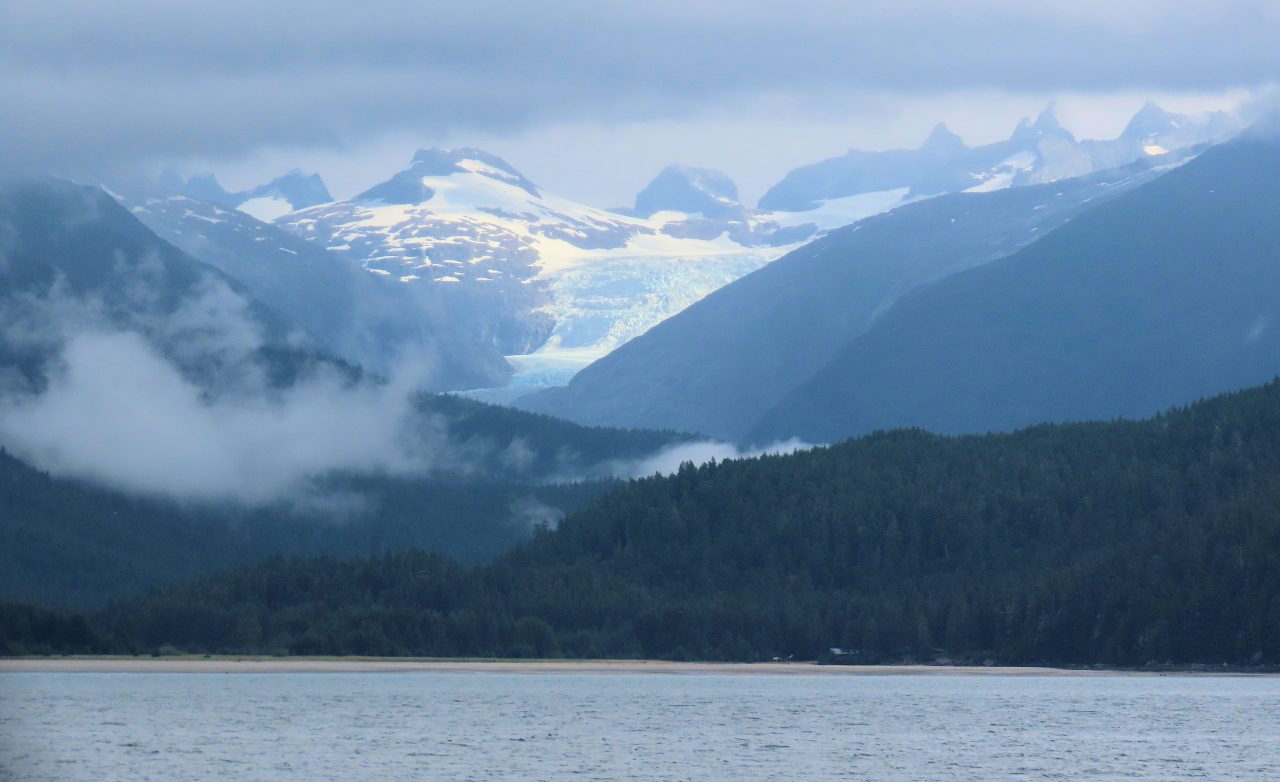
The Importance of Setting

Your story takes place in a very special environment, so choose carefully. Setting controls the things that your character sees, hears and does.

If it is a time in the past, you might have to do some research. What does the city/country look like during that time period? How do people speak? What slang words and sayings were popular then? Did technology exist?

For example, I remember that my mom’s first washing machine was a ringer style, meaning that once the clothes were washed, they had to be passed through the ringers one by one in order to remove as much water as possible.

What if you choose a future world? The same rules apply. Map out the dimensions of your world. Draw in the ports, mountains, cities both large and small. If there are boundaries between countries, make them clear. Think about the shapes of buildings. Are they all high-rise or has some disaster occurred that destroyed everything and so construction is primitive? What types of technological devices do they have? If smart phones, what can the phones do in your world that they cannot do now?

I recently read a futuristic story in which the characters used watches to communicate. At the time the story was written, that would have been considered new technology, but it isn’t today. Think outside the box.

Part of the setting would also be the threat level. Does your character live in a dark time in which danger lurks in every corner? Or is it a peaceful seaside village filled with happy, complacent people?

I find it best to write it down. Make a list. Even collect photo images and put them all in a binder. The advantage of using a binder is that you can store all your information in one place and keep it handy. Refer to it often so as to remain consistent in your story.

Have fun with this one.

Character description

Have you ever sat down and prepared an outline that describes your characters? Thought about their likes/dislikes? Where they’ve been and what types of things they like to do?

If you haven’t, the time to do so is now. Why? It’s important to know what our characters like and dislike in order to understand what motivates them to behave in certain ways.

Your task is to create a list for each character in your story, whether a main character or a subordinate. Include where they are from, family ties, mannerisms (such as head toss, twiddling fingers) and friends.

Write out some sample dialogue that shows the differences in the ways your characters speak. Do they have an accent? Use contractions or use more formal language?

Upon up a few YouTube videos and listen to what word choices people use. Each of us has a different pattern and rhythm to our speech. Create dialogue that shows those differences.

Lastly  look through websites and find pictures of where your characters live, how they dress, places they might visit.

Put all this in a binder so that it is easy to access.

Now, begin working on your characters!

Have fun  with this one.

Journeys

Throughout our lives we have experienced many different kinds of journeys. Some are internal, such as exploring personal beliefs, while some involve travel around the country. Most enrich our lives, either through things we have seen, people we have met or observations that impact us due to their unusual nature.

Everyone travels, although the distances that we cover vary depending upon time and money.

Some of us only visit relatives. We might drive overnight to get there and crash on floors while we are there, but we get to spend time with them, learn from them, be with them.

Some of us are lucky to travel further from home. We hop on planes and dash across the country or drop into other countries. We walk about, seeing things that we’ve dream about.

Your task is to write about a journey that you have experienced. Think of the sights, sounds, feelings that might have changed you. Use details to enrich the story.

Add in characters that you saw in order to add depth.

Have fun with this one.